
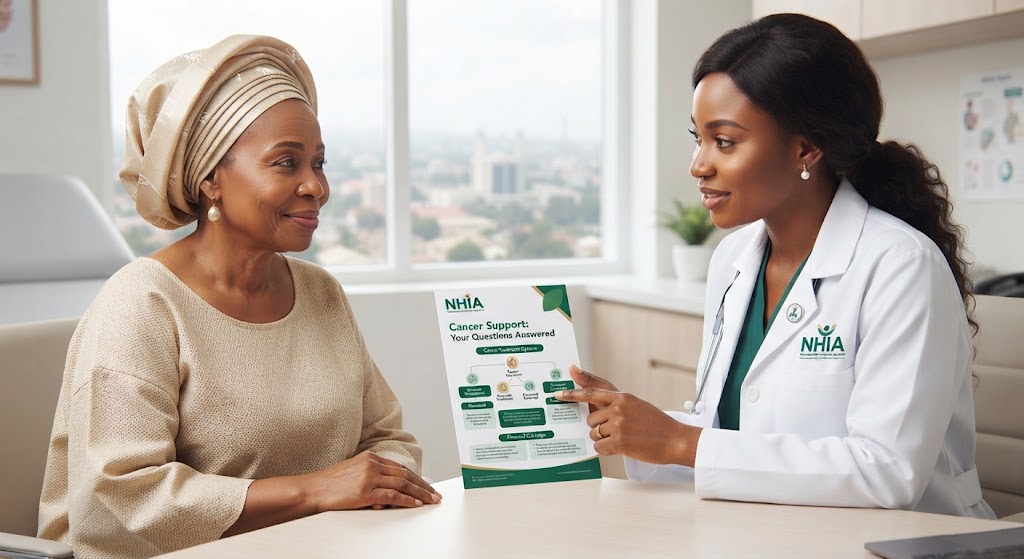
Cancer treatment can place a serious financial burden on patients and their families, especially when treatment involves repeated hospital visits, diagnostic tests, medicines, surgery or radiotherapy.
In a recent development, the National Health Insurance Authority (NHIA) has expanded financial protection for Nigerians receiving cancer care as part of its broader effort to improve access to healthcare.
The development is important for patients, families and people considering health insurance because it could help reduce some of the expenses associated with cancer diagnosis and treatment.
What has the NHIA announced?
The NHIA recently reported that more than 23 million Nigerians are enrolled in the national health insurance system.
The Authority also announced an expanded partnership with pharmaceutical company Roche to improve access to selected oncology medicines through a cost-sharing arrangement.
According to the NHIA, the arrangement is designed to reduce the amount patients have to pay for certain cancer medicines.
The development comes alongside existing cancer-related services included in the NHIA benefits and payment structure. These include certain diagnostic and treatment services such as mammography, CT and MRI scans, bone scans, cancer-related diagnostic tests and radiotherapy.
How does the cancer medicine cost-sharing work?
Under the expanded arrangement reported by the NHIA, Roche covers 50 per cent of the cost of selected oncology medicines, while the NHIA covers 30 per cent and the patient pays the remaining 20 per cent.
This arrangement applies to selected medicines and should not be interpreted as meaning that every cancer drug or every cancer patient will automatically receive the same level of support.
Patients should therefore confirm with their health insurance provider and accredited healthcare facility whether a particular medicine and treatment plan is covered.
What about radiotherapy?
Radiotherapy is another important part of cancer treatment, but its cost can make treatment difficult for some patients.
The NHIA has also provided financial support for eligible radiotherapy patients. The Authority has reported support ranging from up to ₦400,000 to full coverage, depending on eligibility and the applicable arrangement.
The NHIA had previously announced a 50 per cent radiotherapy subsidy capped at ₦400,000 for eligible patients.
This means patients should not assume that the full cost of radiotherapy will automatically be paid by insurance. The exact level of support depends on the applicable NHIA programme, eligibility requirements and treatment arrangement.
Which cancer-related services can insurance cover?
Cancer care is more than buying medicines. Patients may require several services during diagnosis and treatment.
According to the NHIA, its cancer-related benefits and payment structure include services such as:
Mammography
CT scans
MRI scans
Bone scans
Cancer-related diagnostic tests
Radiotherapy
Selected oncology medicines
The availability and level of coverage can depend on the patient’s insurance programme and the terms applicable to the treatment.
What does this mean for Nigerian patients?
For patients already enrolled in an NHIA programme, the development is a reminder to understand exactly what their health insurance package covers.
Rather than assuming that every cancer-related expense will be paid, patients should ask their healthcare provider or insurance administrator about:
- Whether the hospital is accredited under their NHIA programme.
- Whether the particular cancer treatment is covered.
- Which medicines are included.
- How much the patient is expected to contribute.
- Whether prior authorisation or referral is required.
- Whether diagnostic tests and radiotherapy are covered under their specific plan.
Getting these answers early can help patients and families plan financially and avoid unexpected expenses.
Can people who are not civil servants access NHIA programmes?
NHIA coverage is not limited to civil servants.
The Authority’s Group Individual and Family Social Health Insurance Programme (GIFSHIP) is designed to provide health insurance options for categories of people outside the formal public-service system, including self-employed people, families, small businesses and retirees.
This is particularly relevant in Nigeria, where many people work outside the formal employment sector.
Why health insurance matters in cancer care
Cancer treatment can last for weeks, months or even longer depending on the type and stage of cancer and the treatment plan recommended by the medical team.
Without financial protection, repeated medical expenses can become difficult for families to manage.
Health insurance cannot remove every cost associated with cancer treatment, but effective coverage can help reduce some out-of-pocket expenses and make it easier for patients to continue necessary care.
The NHIA has also stated that its broader goal is to improve financial access to healthcare and reduce the financial hardship associated with illness.
What Nigerians should do
Nigerians should not wait until they become seriously ill before finding out how their health insurance works.
If you are already enrolled, take time to understand your benefits and know the hospitals and healthcare providers available to you.
If you are not enrolled, you can explore the health insurance programmes available to you and determine which one you are eligible for.
For cancer patients, the most important step is to discuss coverage directly with the healthcare facility and the relevant NHIA administrator before beginning major treatment whenever possible.
The expansion of cancer-related financial support by the NHIA is an important development for Nigerians because the cost of cancer care can be a major concern for patients and families.
However, patients should understand that NHIA cancer support does not mean every cancer treatment, medicine or hospital bill is automatically free. Coverage depends on the applicable programme, treatment, eligibility and approved arrangements.
As Nigeria continues to expand health insurance coverage, better awareness will be just as important as enrolment. Knowing what your health insurance covers can help you make better healthcare decisions when you or a family member needs treatment.
Health information in this article is for public education and should not replace advice from a qualified healthcare professional or your health insurance provider.