
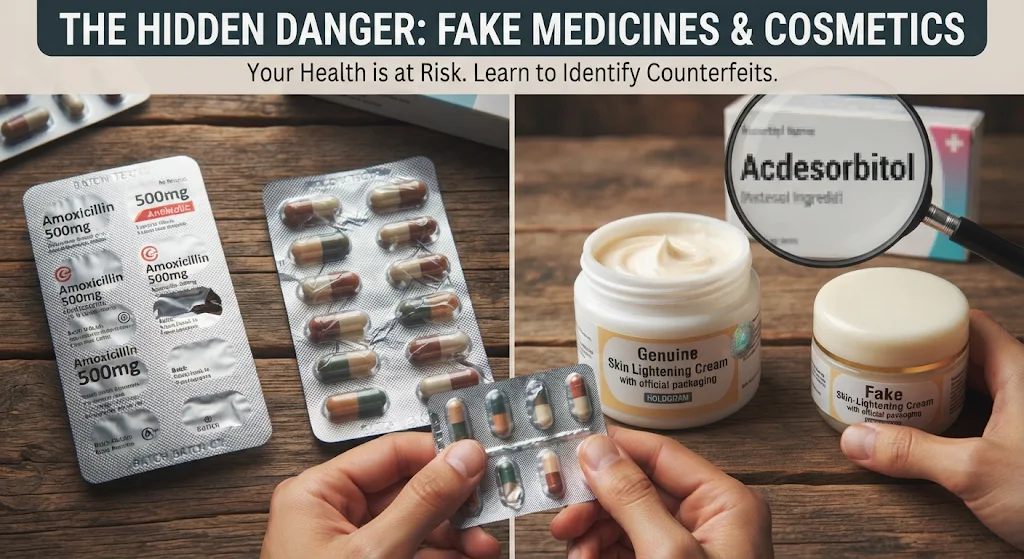
The products people use every day to treat illnesses, maintain their appearance and care for their bodies are expected to be safe. However, the growing circulation of fake medicines and counterfeit cosmetics poses a serious threat to public health, putting unsuspecting consumers at risk of harmful reactions, treatment failure and long-term health complications.
From fake antibiotics and pain relievers to adulterated skin-lightening creams, bleaching products and counterfeit body lotions, unsafe products can enter the market through different channels, including unregulated shops, street vendors and online sellers.
Many consumers purchase these products without knowing that what they are applying to their skin or taking into their bodies may contain harmful substances or ingredients that differ from what is stated on the packaging.
The danger is particularly concerning because counterfeit products are sometimes packaged to look almost identical to genuine brands, making it difficult for ordinary consumers to identify them.
What Are Fake Medicines and Cosmetics
Fake or counterfeit medicines are pharmaceutical products deliberately misrepresented in terms of their identity, composition or source.
They may contain incorrect ingredients, insufficient amounts of active pharmaceutical substances, no active ingredients at all or potentially harmful contaminants.
Some medicines may also be stored or transported under unsuitable conditions, affecting their quality and effectiveness.
Counterfeit cosmetics, on the other hand, are beauty and personal-care products that are falsely presented as genuine brands or contain ingredients that do not meet required safety and quality standards.
These products may include body creams, facial cleansers, soaps, makeup, perfumes, skin-lightening products and hair treatments.
Not every low-quality or unregistered product is necessarily counterfeit, but products that have not undergone appropriate safety assessment can still pose health risks.
The Health Risks of Fake Medicines
One of the greatest dangers of counterfeit medicines is that they may fail to treat the conditions for which they are purchased.
For example, a person taking fake antibiotics may continue to experience an infection because the medicine contains little or none of the required active ingredient.
This can delay proper treatment and allow an illness to become more serious.
Some counterfeit medicines may also contain incorrect or harmful substances capable of causing unexpected reactions.
The potential consequences include:
Treatment failure: Medicines without the correct active ingredients may not control infections or other illnesses.
Drug resistance: Poor-quality antibiotics containing insufficient active ingredients can contribute to conditions that encourage antimicrobial resistance, particularly when combined with inappropriate antibiotic use.
Poisoning: Medicines contaminated with toxic substances may cause serious harm to the body.
Organ damage: Exposure to harmful ingredients may affect important organs, including the liver and kidneys.
Severe allergic reactions: Unknown substances or incorrect formulations may trigger unexpected reactions in some individuals.
The danger becomes even greater when people unknowingly take counterfeit medicines to manage serious conditions such as malaria, hypertension, diabetes and bacterial infections.
How Fake Cosmetics Can Damage the Skin
While counterfeit medicines pose significant risks when swallowed, injected or otherwise administered, fake cosmetics can also cause serious problems through repeated application to the skin.
Some unregulated skin-lightening products may contain harmful levels of substances such as mercury or potent corticosteroids.
Mercury-containing skin products can damage the kidneys and nervous system, while prolonged or inappropriate use of potent topical corticosteroids can cause skin thinning, stretch marks, visible blood vessels and other complications.
Other unsafe cosmetic formulations may contain irritating substances capable of triggering contact dermatitis.
Possible effects of using harmful cosmetics include:
Persistent skin irritation and itching.
Redness, swelling and burning sensations.
Allergic reactions and contact dermatitis.
Skin thinning and easy bruising.
Uneven skin pigmentation.
Increased sensitivity to sunlight.
Kidney or nervous system damage from exposure to mercury.
Some of these complications may develop gradually, meaning consumers might not immediately connect their symptoms to a product they have been using for weeks or months.
Why Are People Still Buying Fake Products
Despite public awareness campaigns and regulatory efforts, counterfeit medicines and cosmetics continue to find their way into consumer markets.
One major reason is the desire to save money.
When consumers encounter expensive original products, they may be tempted to purchase cheaper alternatives without checking their authenticity.
Another contributing factor is the increasing popularity of online shopping and social media vendors.
Some sellers advertise products using attractive packaging, celebrity endorsements, exaggerated claims and before-and-after photographs.
Consumers may be convinced by these advertisements without knowing where the products were manufactured or whether they meet regulatory requirements.
The lack of adequate product knowledge also contributes to the problem. Many people do not know how to verify medicine registration numbers or identify suspicious packaging.
Warning Signs That a Product May Be Unsafe
Although counterfeit products can be difficult to identify, certain warning signs should make consumers cautious.
Look out for:
Unusually cheap prices compared with established sellers.
Broken seals or damaged packaging.
Spelling errors and poorly printed labels.
Missing manufacturing or expiry dates.
Unclear ingredient lists.
Unusual changes in colour, smell or texture.
Products without verifiable registration details.
Sellers who cannot provide reliable information about the product’s source.
However, appearance alone cannot establish whether a product is genuine. Some counterfeit products are manufactured with convincing packaging.
Consumers should verify regulated products through appropriate regulatory channels rather than relying entirely on visual inspection.
How Nigerians Can Protect Themselves
Protecting yourself against fake medicines and cosmetics begins with making informed purchasing decisions.
Buy medicines from licensed pharmacies: Avoid purchasing prescription medicines from unverified street vendors or sellers who cannot establish their legitimacy.
Check product registration: In Nigeria, consumers can use the National Agency for Food and Drug Administration and Control (NAFDAC) verification services to check the registration status of regulated products.
Read product labels: Pay attention to the manufacturer’s details, ingredients, batch number, manufacturing date and expiry date.
Be careful with online purchases: Before ordering medicines or cosmetics online, investigate the seller and confirm that the products come from an authorised source.
Avoid products promising instant results: Claims such as instant skin whitening, permanent treatment of multiple diseases or dramatic results within a few days should raise concerns.
Seek professional advice: Speak with a pharmacist, doctor or qualified healthcare professional before using unfamiliar medicines, especially for persistent symptoms.
What Is NAFDAC Doing About Counterfeit Products
The National Agency for Food and Drug Administration and Control (NAFDAC) plays an important role in regulating medicines, cosmetics and other regulated products in Nigeria.
Its responsibilities include product registration, inspection of manufacturing facilities, market surveillance, laboratory testing and enforcement actions against manufacturers and distributors of substandard and falsified products.
The agency also conducts public awareness campaigns and encourages consumers to report suspicious products.
However, regulatory authorities cannot tackle the problem alone. Manufacturers, distributors, retailers, healthcare professionals and consumers all have important roles to play.
Consumers who suspect that a medicine or cosmetic product is fake should report it to NAFDAC rather than continue using it or distribute it to others.
The Public Health Consequences Go Beyond Individual Consumers
The dangers of fake medicines and cosmetics extend beyond the person who purchases them.
When people use ineffective medicines, infections may remain untreated, diseases may progress and healthcare costs may increase.
Counterfeit antibiotics also contribute to the wider challenge of antimicrobial resistance, which makes infections increasingly difficult to treat.
Similarly, unsafe cosmetic products can create a growing burden of skin conditions and other complications that require medical attention.
The circulation of counterfeit products also undermines confidence in legitimate manufacturers, pharmacies and healthcare systems.
This makes the fight against fake products an important public health responsibility.
Fake medicines and cosmetics are not simply a problem of poor product quality; they are a threat to human health and safety.
A medicine that does not contain the correct ingredients may fail to save a life, while a cosmetic product marketed as a beauty solution may expose its user to substances capable of causing lasting damage.
Consumers must become more cautious about what they buy, swallow and apply to their bodies.
Before purchasing that unusually cheap medicine or attractive skincare product, take a moment to verify its source and authenticity.
Your health is too important to gamble with. A product that looks original is not necessarily safe, and a cheap bargain can sometimes come with a much higher health cost.