
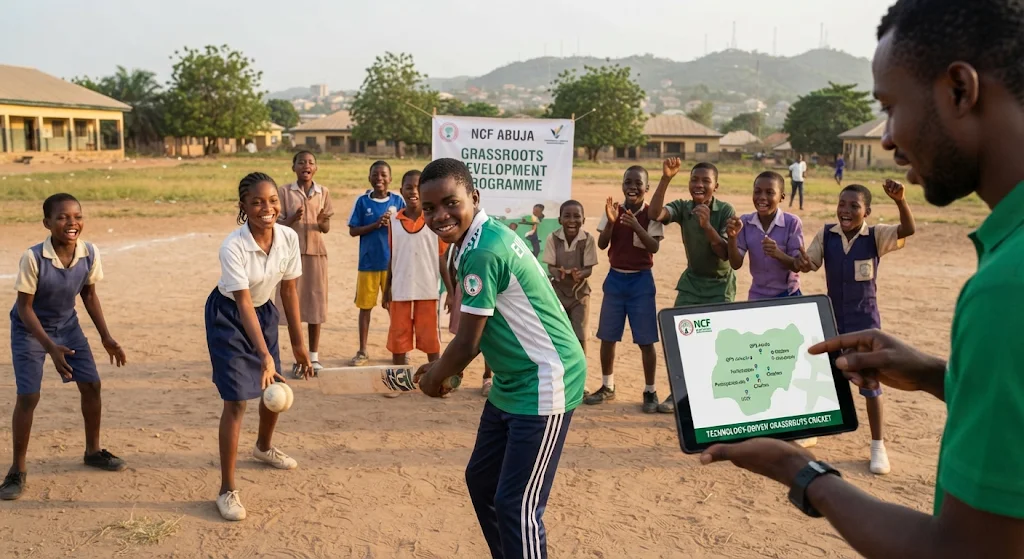
The Nigeria Cricket Federation (NCF) has called on sports federations across the country to embrace technology and effective monitoring systems to strengthen grassroots sports development and create more opportunities for young athletes.
The call was made by the federation’s Business Development Manager, Musa Ehizoje, on Friday, November 20, 2026, at the Nigeria Sports Summit in Abuja, where he presented the federation’s approach to identifying and developing young cricket talents.
Ehizoje, who represented the NCF President, Uyi Akpata, explained that technology has become an important tool in monitoring grassroots activities, verifying participation figures and improving accountability within the federation’s development programmes.
According to him, the adoption of digital monitoring systems has helped the federation track the activities of coaches, identify participating schools and maintain accurate records of children introduced to cricket across different parts of Nigeria.
How Technology Is Helping Cricket Development
One of the major technologies highlighted by Ehizoje is the Geographic Information System (GIS), which the federation uses to monitor grassroots cricket activities.
The system helps the NCF verify the locations of coaches and schools where cricket development programmes are being conducted.
With the technology, coaches can submit the names of schools they visit, while the software provides geographical coordinates that help the federation confirm their reported locations.
The federation also maintains a database containing the names, ages and classes of children introduced to the sport.
This approach allows administrators to monitor participation more effectively and obtain reliable information about the progress of their grassroots programmes.
NCF Targets 200,000 New Cricket Participants Annually
Ehizoje disclosed that the federation is targeting the introduction of 200,000 new participants to cricket every year, representing a significant increase from its initial target of 20,000.
He also revealed that the federation has nearly 100 staff members, with more than 75 per cent working as grassroots coaches and technical personnel responsible for developing the sport nationwide.
National and regional development officers supervise the coaches, while quarterly performance reviews are conducted to assess their activities and determine whether participation targets are being achieved.
The federation believes that combining technology with effective supervision can improve the reach and accountability of grassroots sports programmes.
Other Sports Federations Encouraged to Adopt Digital Monitoring
The NCF official challenged other sports federations to adopt similar approaches by setting realistic annual participation targets and developing practical strategies for monitoring their activities.
He maintained that technology could help sports administrators move beyond estimates and recommendations by providing measurable information about what is happening at the grassroots level.
He also stressed that successful sports development requires a change in administrative thinking, effective planning and commitment to implementation.
According to Ehizoje, the systems available to cricket can also be adopted by other sports, provided administrators are willing to embrace new methods of working.
Teaching Values Alongside Sporting Skills
Beyond technology, Ehizoje highlighted the importance of character development in grassroots sports programmes.
He explained that coaches should not concentrate exclusively on teaching sporting techniques but should also educate young athletes about discipline, ethics, teamwork and proper conduct.
He emphasised that children should first understand the values and etiquette associated with a sport before progressing into advanced coaching.
This approach, according to him, helps develop responsible athletes who can represent their communities and country positively.
Cricket Development Reaches Internally Displaced Communities
The federation also highlighted its efforts to identify sporting talents in underserved communities, including Internally Displaced Persons (IDP) camps.
Ehizoje disclosed that some young people identified through these initiatives have progressed to represent Nigeria internationally.
The development demonstrates how grassroots sports programmes can create opportunities for children beyond traditional sporting environments.
By taking cricket into schools and displaced communities, the federation is expanding access to the sport and creating pathways for young people who may otherwise have limited opportunities to participate in organised sporting activities.
What This Means for the Future of Nigerian Sports
The Nigeria Cricket Federation’s approach highlights the growing importance of technology, accountability and structured talent development in Nigerian sports.
For a country with a large youth population, identifying talented athletes early and providing them with the necessary training and facilities could help strengthen national sports development.
However, technology alone cannot solve all the challenges facing grassroots sports. Adequate funding, sporting facilities, qualified coaches, equipment and regular competitions remain essential.
Other sports federations could benefit from adopting reliable monitoring systems while developing programmes that give young athletes opportunities to progress from local competitions to national and international levels.
As Nigeria continues to explore ways of improving its sporting performance, the emphasis on technology-driven grassroots development raises an important question, how many promising talents could emerge if young athletes across the country were given better opportunities, proper training and access to modern sporting facilities?