
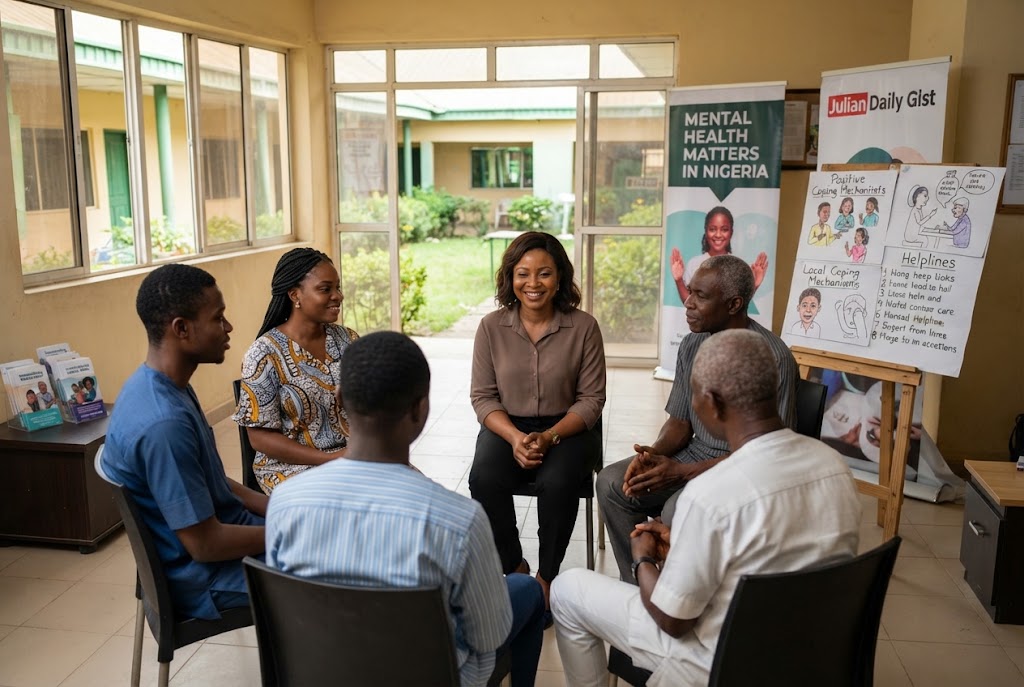
Mental health is becoming an increasingly important issue in Nigeria, with experts calling for stronger action to ensure that people living with mental health conditions can access appropriate care and support.
While conversations around depression, anxiety, substance use and other mental health conditions have become more common in recent years, many Nigerians still struggle to get professional help when they need it.
Experts say Nigeria needs to move beyond simply talking about mental health and focus more attention on accessible services, trained professionals, early intervention and public education.
Mental health affects how people think, feel and cope with everyday life. It can influence relationships, work, education and the ability to handle difficult situations.
Mental health problems can affect anyone, regardless of age, occupation or financial status.
However, people experiencing psychological distress may sometimes hesitate to seek help because of fear of being judged or misunderstood.
This is one reason mental health awareness remains important in Nigeria.
Why Access to Care Remains a Challenge
One of the major concerns surrounding mental healthcare in Nigeria is access.
People who need professional support may face several barriers, including the cost of treatment, limited availability of specialists and the distance between their homes and appropriate healthcare facilities.
There is also a shortage of mental health professionals compared with the size of the population that needs care.
These challenges can make it difficult for people to receive help early.
Early intervention is important because seeking professional assistance when symptoms begin can help prevent some problems from becoming more severe.
Stigma Still Affects Mental Health Care
Stigma remains another major obstacle.
Some people experiencing mental health difficulties may be labelled as weak, spiritually troubled or simply unable to cope. Such attitudes can discourage people from speaking openly about what they are experiencing.
As a result, some people may delay seeking professional help until their condition becomes more difficult to manage.
Mental health professionals and advocates have therefore continued to encourage Nigerians to treat mental health concerns as health issues that deserve appropriate attention.
Nigeria’s Mental Health Act
Nigeria has taken steps to strengthen the legal framework surrounding mental healthcare.
The Mental Health Act was signed into law in 2022 and provides a framework for protecting the rights of people with mental health conditions and improving mental healthcare in the country.
However, passing legislation is only one part of the process.
Experts have continued to raise concerns about implementation, funding, infrastructure and the availability of mental health services.
For the law to have a meaningful impact, its provisions need to translate into services that people can actually access.
Why Mental Health Should Be Taken Seriously
Mental health can affect almost every area of life.
Someone struggling with depression or severe anxiety, for example, may find it difficult to concentrate at work or school. Mental health challenges can also affect relationships, sleep, appetite and everyday activities.
Children and young people can also experience mental health difficulties, making early awareness particularly important for parents, teachers and caregivers.
Recognising warning signs and encouraging people to seek appropriate support can make a difference.
What Can Be Done?
Improving mental healthcare in Nigeria will require action at different levels.
1. Increase access to mental health services
More mental health services need to be available within communities, rather than concentrating care in only a few specialist facilities.
2. Train more professionals
Nigeria needs more trained mental health professionals, including psychiatrists, psychologists, psychiatric nurses and other healthcare workers involved in mental healthcare.
3. Address stigma
Public education can help Nigerians understand that mental health conditions are medical and psychological concerns and should not automatically be associated with shame.
4. Encourage early help-seeking
People should be encouraged to speak with qualified healthcare professionals when they notice persistent or troubling changes in their mood, thoughts or behaviour.
5. Strengthen implementation of mental health policies
Policies and legislation need adequate funding, monitoring and implementation if they are to improve people’s access to care.
What Nigerians Can Do
Individuals also have a role to play.
If someone is experiencing persistent sadness, overwhelming anxiety, significant changes in behaviour, difficulty functioning or thoughts of self-harm, they should not be encouraged to simply ignore the problem.
Speaking with a qualified healthcare professional can be an important first step.
Friends and family members can also provide support by listening without judgement and encouraging professional help when necessary.
Mental health should not only become a topic of conversation when there is a crisis.
Nigeria’s growing mental health discussion needs to include prevention, early intervention, affordable care, professional training and protection of the rights of people living with mental health conditions.
The call from experts for urgent action is therefore about more than treating mental illness. It is also about creating a healthcare system where Nigerians can seek help without fear, discrimination or unnecessary barriers.
As awareness continues to grow, turning that awareness into accessible and effective mental healthcare will remain one of the country’s important public health challenges.