
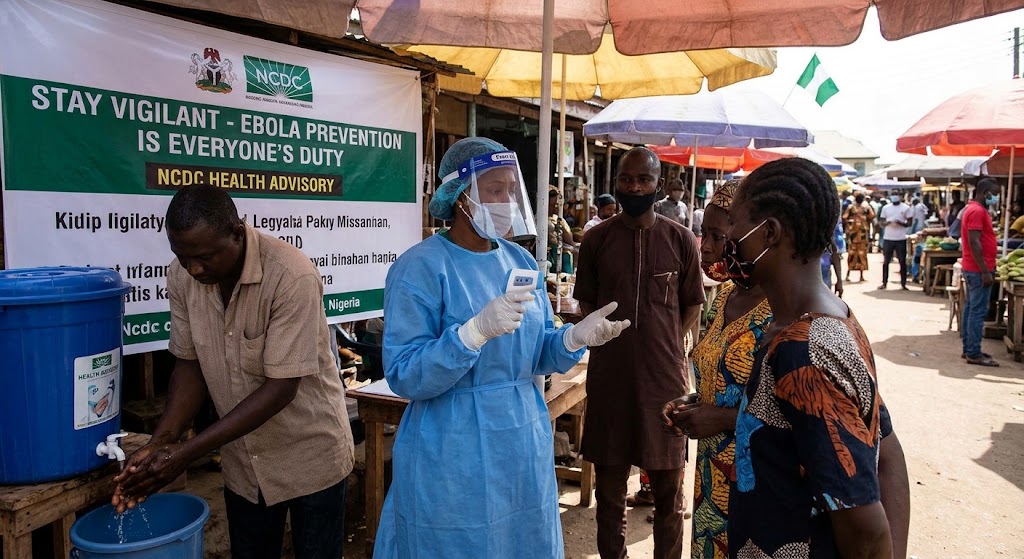
Nigerians on Alert as Ebola Developments Raise Fresh Health Concerns Across Africa

Nigeria is strengthening its public health response following the confirmation of an imported Ebola case in the Federal Capital Territory, Abuja, as health authorities across Africa continue working to contain the spread of the disease.

The development has drawn attention to the importance of disease surveillance, early diagnosis, and public awareness as countries work to prevent further transmission across borders. https://juliandailygist.com/2026/10/26/nigerias-ebola-response-what-contact-tracing-means-for-families-and-communities/

According to the World Health Organization (WHO), Nigeria confirmed a case of Bundibugyo virus disease, a form of Ebola, on October 20, 2026. The patient is a woman who had recently travelled from Uganda to Nigeria. She developed symptoms several days after arriving in the country and later tested positive for the virus.

The patient was placed in isolation and received medical care, while Nigerian health authorities began tracing people who might have been exposed to the infection.

In its October 25 update, the Nigeria Centre for Disease Control and Prevention (NCDC) said the patient remained under medical care, with infection prevention and control measures in place. Authorities have also been monitoring identified contacts as part of efforts to limit the possibility of further transmission.

The confirmation of the case has prompted renewed attention to Nigeria’s preparedness, particularly at hospitals, airports, and other points where early detection and prompt reporting of suspected infections are important.

However, health officials have urged Nigerians to remain calm and rely on verified information rather than rumours circulating on social media.

The situation is also attracting attention beyond Nigeria. The current outbreak of Bundibugyo virus disease has affected several countries, with the Democratic Republic of the Congo experiencing the largest burden of cases and deaths. Kenya has also reported cases linked to the wider regional situation.

According to the WHO’s October 23 update, the Democratic Republic of the Congo had recorded 9,704 confirmed cases and 4,687 deaths as of October 20. The figures highlight the seriousness of the outbreak and the challenges health authorities face in detecting cases early and ensuring patients receive timely care.

Despite these developments, it is important to distinguish between the situation in Nigeria and the wider outbreak across Africa. Nigeria’s confirmed case was reported as imported, and the confirmation of one case does not automatically mean that widespread transmission is occurring throughout the country.

Public health authorities are continuing investigations and monitoring contacts to determine whether additional infections have occurred.

Ebola is a serious infectious disease that can spread through direct contact with the blood or other bodily fluids of an infected person who is showing symptoms, as well as through contaminated objects. It does not spread simply because people live in the same community or pass one another in public.

Symptoms can include fever, severe weakness, muscle pain, headache, sore throat, vomiting, diarrhoea, and, in some cases, unexplained bleeding. These symptoms can resemble those of other illnesses, making professional medical assessment and laboratory testing important.

Anyone who develops concerning symptoms after a possible exposure should contact a healthcare provider or public health authority promptly and explain their exposure or travel history. People should avoid close contact with anyone suspected of having Ebola until they have received appropriate medical guidance.

Health experts also emphasise the importance of hand hygiene, safe healthcare practices, and avoiding contact with the bodily fluids of people who may be infected. Anyone who believes they may have been exposed should seek advice from health authorities rather than attempting to manage the situation alone.

For healthcare workers, early recognition of suspected cases, appropriate protective equipment, and strict infection prevention procedures remain essential to reducing the risk of transmission.

The developments serve as a reminder that infectious diseases can cross international borders through travel, making cooperation between countries and timely sharing of health information particularly important.

For Nigeria, the priority remains identifying possible cases quickly, monitoring contacts, protecting healthcare workers, and communicating accurate information to the public.

While the news may understandably cause concern, spreading unverified reports or creating unnecessary panic will not help control the situation. Nigerians are encouraged to follow announcements from the NCDC, the Federal Ministry of Health and Social Welfare, and the WHO for reliable updates.

As investigations continue, the effectiveness of surveillance, public cooperation, and rapid medical response will be important in determining how the situation develops.

For now, Nigerians should remain informed, take official health advice seriously, and avoid treating rumours as confirmed information.


Julian Daily Gist Editorial Team

Julian Daily Gist Editorial Team is the team responsible for researching, writing, editing, and publishing news and feature content on Julian Daily Gist. Our coverage includes Nigerian current affairs, lifestyle, entertainment, sports, health, business, and human-interest stories. We aim to provide readers with timely, accurate, and responsibly sourced information. The Julian Daily Gist Editorial Team researches, writes, edits, and publishes news and feature content covering Nigerian current affairs, entertainment, sports, health, business, lifestyle, and human-interest stories. We aim to provide accurate, timely, and responsibly sourced information and update our reports when credible new information becomes available. The Julian Daily Gist Editorial Team is responsible for researching, writing, editing, and publishing content across Julian Daily Gist. Our coverage includes Nigerian current affairs, politics, business, entertainment, sports, health, lifestyle, and human-interest stories. We aim to provide readers with timely, accurate, useful, and responsibly sourced information. Our team makes reasonable efforts to verify important information, identify sources, distinguish allegations from confirmed facts, and update reports when credible new information becomes available. We also believe in transparency and accountability. Readers can contact our editorial team to report factual errors, request corrections, or provide additional information relevant to a published story. Editorial focus: News, current affairs, lifestyle, entertainment, sports, health, business, and human-interest stories. Team BIo: The Julian Daily Gist Editorial Team is responsible for researching, writing, editing, and publishing content across Julian Daily Gist. Our coverage includes Nigerian current affairs, politics, business, entertainment, sports, health, lifestyle, and human-interest stories. We aim to provide readers with timely, accurate, useful, and responsibly sourced information. Our team makes reasonable efforts to verify important information, identify sources, distinguish allegations from confirmed facts, and update reports when credible new information becomes available. We also believe in transparency and accountability. Readers can contact our editorial team to report factual errors, request corrections, or provide additional information relevant to a published story. Editorial focus: News, current affairs, lifestyle, entertainment, sports, health, business, and human-interest stories. Editorial Policy: At Julian Daily Gist, our goal is to provide readers with timely, useful, accurate, and responsibly presented news and information. We cover Nigerian current affairs, politics, business, entertainment, sports, health, lifestyle, human-interest stories, and other topics of interest to our readers. 1. Accuracy and Verification We make reasonable efforts to ensure that information published on Julian Daily Gist is accurate and presented in its proper context. Before publishing a report, our editorial team makes reasonable efforts to: - Check information against credible sources. - Verify names, dates, locations, figures, and other important details. - Attribute information to the appropriate source. - Distinguish confirmed facts from allegations, claims, opinions, and speculation. - Update stories when credible new information becomes available. When information cannot be independently verified, we make this clear to readers rather than presenting it as established fact. 2. Sources We use a range of sources, including: - Official government statements. - Police and security agencies. - Courts and legal documents. - Government agencies. - Direct interviews and statements. - Reputable news organizations. - Publicly available records. - Verified social media accounts and statements. When an article relies substantially on information reported by another publication, we aim to clearly attribute the information to that source. We do not intentionally present another publication's reporting as our own. 3. Originality Julian Daily Gist aims to provide original editorial value. When we report information that has already been published elsewhere, we seek to add value through original writing, context, verification, analysis, additional information, or other useful material. We do not intentionally copy and republish articles from other websites without appropriate attribution and meaningful editorial contribution. 4. Allegations and Sensitive Claims When reporting allegations involving individuals or organizations, we make reasonable efforts to clearly identify allegations as allegations. We avoid presenting unproven accusations as established facts. Where relevant, we seek or include responses from the person, organization, or representative concerned. For criminal matters, we recognize that an allegation, arrest, charge, or accusation does not by itself establish guilt. 5. Headlines Our headlines are intended to accurately reflect the content of our articles. We aim to avoid deliberately misleading headlines, fabricated claims, or headlines that exaggerate facts simply to generate clicks. 6. Corrections and Updates We take corrections seriously. If we discover that an article contains a significant factual error, we may correct or update the article as appropriate. Readers who identify an error are encouraged to contact us with specific information supporting the correction. Where appropriate, significant corrections or updates may be noted within the article. 7. Editorial Independence Editorial decisions are made independently of advertisers, sponsors, commercial partners, and other external interests. Advertising or sponsorship does not automatically influence our editorial decisions or the opinions expressed by our writers. 8. Sponsored and Promotional Content Where Julian Daily Gist publishes sponsored, paid, or promotional content, we aim to clearly identify it as such. Sponsored content does not necessarily represent the independent editorial views of Julian Daily Gist. 9. Conflicts of Interest Our editorial team should avoid situations where personal, financial, or other interests could improperly influence reporting. Where a relevant conflict of interest exists, we aim to disclose it when appropriate. 10. Use of Images and Other Media We aim to use images, videos, graphics, and other media responsibly and with appropriate permission, licensing, attribution, or other lawful basis where required. We do not knowingly use copyrighted material in a manner that infringes the rights of its owner. If you believe that material published on Julian Daily Gist infringes your copyright, please contact us so that we can review the matter. 11. Artificial Intelligence We may use technology and artificial intelligence tools to assist with certain editorial tasks, such as research support, proofreading, formatting, transcription, or drafting assistance. However, AI-generated information is not treated as automatically accurate. Content remains subject to human review, editing, fact-checking, and editorial judgment before publication where appropriate. We do not intentionally publish fabricated information generated by AI. 12. Privacy and Personal Information We take reasonable care when handling personal information and avoid publishing unnecessary private information about individuals. Sensitive personal information is published only when there is a legitimate public-interest reason and where appropriate. Our handling of visitor information is explained in our Privacy Policy. 13. Opinion and Commentary Opinion articles and commentary represent the views expressed by the respective writer or contributor. Where appropriate, opinion content will be identified as commentary, analysis, or opinion so that readers can distinguish it from straightforward news reporting. 14. User-Generated Content Comments and other material submitted by readers may be moderated. We reserve the right to remove content that is unlawful, defamatory, abusive, discriminatory, misleading, threatening, spam-related, or otherwise inappropriate. User comments do not necessarily represent the views of Julian Daily Gist. 15. Our Commitment We are committed to improving the quality, accuracy, transparency, and usefulness of Julian Daily Gist. As our publication grows, we will continue reviewing our editorial practices and updating this policy when necessary. 16. Contact and Corrections If you have a correction, clarification, complaint, copyright concern, or question about our editorial practices, please contact us through our Contact Us page.

You May Also Like

Leave a Reply

Your email address will not be published. Required fields are marked *