
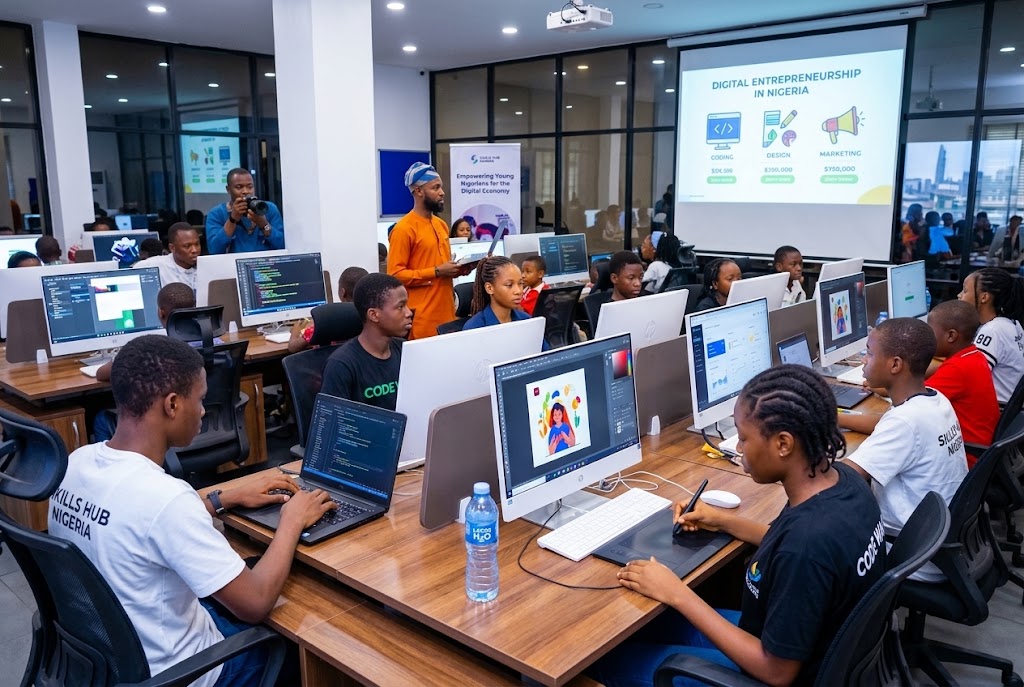
Across Nigeria, a growing number of young people are exploring opportunities to earn money through digital skills rather than relying entirely on traditional employment. From social media management and graphic design to video editing, website development, content creation and online marketing, young Nigerians are discovering ways to turn their knowledge and creativity into income-generating businesses.
For many, the shift is driven by the desire for financial independence, the search for employment opportunities and the increasing role of technology in everyday business activities. As more companies move their services online and customers spend more time on digital platforms, individuals with the right skills are finding opportunities to provide services to businesses and clients within and outside Nigeria.
The development reflects the growing importance of Nigeria’s digital economy, where technology is creating new ways for people to work, advertise products, sell services and build businesses without necessarily owning a physical office.
Traditional employment remains an important source of income for millions of Nigerians. However, competition for available jobs and concerns about earning enough to meet daily expenses have encouraged some young people to explore alternative career paths. Instead of waiting indefinitely for employment, some are learning practical digital skills that can help them serve paying clients.
One area attracting considerable attention is social media management. Many businesses now understand that having an online presence can help them reach customers, promote products and build trust. However, not every business owner has the time or knowledge required to manage social media accounts consistently.
This has created opportunities for young Nigerians who can develop content calendars, write captions, design promotional posts, create short videos, respond to customer enquiries and monitor audience engagement. A skilled social media manager can work with restaurants, fashion brands, supermarkets, real estate businesses, schools and other organisations that want to improve their online visibility.
Video editing is another skill creating opportunities in the digital marketplace. Short-form videos have become an important part of online communication, with businesses, influencers, entertainers and content creators regularly seeking editors who can transform raw footage into engaging content.
Young people who understand storytelling, transitions, captions, sound selection and visual presentation can offer editing services to clients who need videos for TikTok, Instagram, Facebook and YouTube. Some begin by editing videos with mobile applications before investing in more advanced equipment as their businesses grow.
Graphic design also remains relevant to businesses looking to establish a recognisable identity. From flyers and product advertisements to logos, event posters and social media graphics, organisations need visual materials to communicate with their customers.
Young designers can build portfolios by creating sample projects, working with small businesses and showcasing their work online. As their experience improves, they may be able to attract larger clients and charge more competitive rates for specialised services.
Another opportunity lies in website development and digital marketing. Businesses that want to reach customers beyond their immediate locations may require websites, online stores, search engine optimisation and digital advertising. People with the relevant knowledge can help companies establish online platforms, attract visitors and convert interest into sales.
These opportunities are not limited to people with university degrees in technology. While formal education can be valuable, many digital skills can also be developed through structured online courses, practical projects, mentorship and consistent practice. What matters is the ability to deliver useful results and demonstrate competence to potential clients.
Content creation has also become an attractive path for young Nigerians who can educate, entertain or inform online audiences. Creators are producing videos about lifestyle, education, business, food, entertainment, fashion and other subjects that attract public interest.
However, content creation should not be mistaken for guaranteed income. Building an audience takes time, and earning money may depend on platform eligibility, advertising opportunities, sponsorships, affiliate marketing and the creator’s ability to develop a loyal community. Many creators spend months or years improving their content before seeing significant financial returns.
Freelancing is another route through which digital skills can generate income. Instead of working exclusively for one employer, freelancers offer services to different clients according to agreed projects or contracts. A Nigerian writer, designer, programmer, editor or virtual assistant may work with local businesses or seek clients in international markets.
International clients can offer access to a wider range of opportunities, but competition is strong. Freelancers must communicate professionally, meet deadlines, protect client information and deliver work that meets agreed standards. They must also consider payment methods, platform charges, currency conversion and the risks associated with unreliable clients.
Although the digital economy offers opportunities, it is not without challenges. Access to reliable electricity and affordable internet remains a concern for many young Nigerians. Someone working online may struggle to meet a deadline when power supply is interrupted or internet connectivity becomes unstable.
The cost of purchasing a suitable laptop, smartphone, software subscriptions and other equipment can also create barriers for beginners. While some services can be delivered using a smartphone, more demanding work may require better hardware and a reliable workspace.
Another challenge is the misconception that digital work provides quick and effortless money. Social media often showcases people celebrating impressive earnings, but it rarely tells the full story of the learning process, failed projects, unpaid work, business expenses and months spent searching for customers.
This perception can lead some beginners to abandon a skill too quickly when they do not make money immediately. In reality, building a sustainable digital business requires patience, continuous learning, good customer service and the ability to solve problems that people are willing to pay for.
There is also the danger of online scams. Young people searching for remote jobs or freelance opportunities may encounter individuals promising guaranteed employment in exchange for registration fees or expensive training packages. Some may also be asked to perform work without receiving payment.
Anyone entering the digital marketplace should research potential employers, understand the terms of an agreement and be cautious about offers that promise unusually high earnings for little effort. Developing a valuable skill and building a credible portfolio are generally more sustainable strategies than chasing unrealistic financial promises.
For young Nigerians who want to enter the sector, choosing the right skill is an important first step. Rather than attempting to learn everything at once, beginners can focus on one area that matches their interests, available resources and the needs of potential customers.
Someone who enjoys storytelling and visual communication might consider video editing or content creation. A person with an interest in technology may explore web development, data analysis or software development. Those who enjoy organising tasks and communicating with people may find opportunities in virtual assistance or social media management.
After choosing a skill, practical experience becomes essential. Beginners can develop sample projects, create a portfolio and offer services to small businesses that need assistance. Their first projects may not generate substantial income, but they can help build experience, confidence and evidence of their abilities.
Young entrepreneurs should also learn basic business management. Knowing how to communicate with clients, calculate costs, set prices, negotiate payment terms and keep financial records can make the difference between earning occasional money and operating a sustainable business.
Networking can help as well. Recommendations from satisfied customers, professional communities and relationships with other freelancers can lead to new opportunities. A strong reputation built on reliability and quality work may become one of a digital entrepreneur’s most valuable assets.
For Nigerian businesses, the growth of digital skills presents an opportunity to access services without necessarily maintaining large in-house teams. A small company may hire a freelance designer for promotional materials, an editor for its videos or a digital marketer to support a campaign. This creates opportunities for skilled young people while helping businesses improve their operations.
The wider economy may also benefit when digital entrepreneurs establish sustainable businesses, employ other people and provide services to customers in different markets. However, the full potential of the sector will depend partly on access to affordable connectivity, reliable electricity, quality training, secure payment systems and policies that encourage innovation.
Financial institutions, technology companies, educational organisations and government agencies can contribute by supporting digital literacy, entrepreneurship training and access to appropriate business resources. Better access to practical training and mentorship could help more young people move beyond learning basic skills to developing services that meet real market needs.
It is equally important for young people to understand that digital work does not automatically eliminate financial uncertainty. Freelancers may experience periods without clients, delayed payments or changing market demand. Unlike some salaried jobs, freelance income may fluctuate from month to month.
For this reason, building a financial cushion, diversifying clients and continuing to improve professional skills can help reduce some of the risks. Digital entrepreneurs should also understand their tax responsibilities and comply with applicable business regulations as their operations grow.
Nigeria’s digital economy is opening new possibilities for young people who are prepared to learn, adapt and provide valuable services. While traditional employment remains important, digital skills can offer additional career paths for those willing to develop their abilities and approach their work professionally.
The opportunity is not simply about making money online. It is about learning how to use technology to solve problems, connect businesses with customers and create services that people genuinely need.
As the demand for digital communication and online business continues to evolve, young Nigerians who invest in practical skills and responsible business practices may be better positioned to take advantage of emerging opportunities.


