
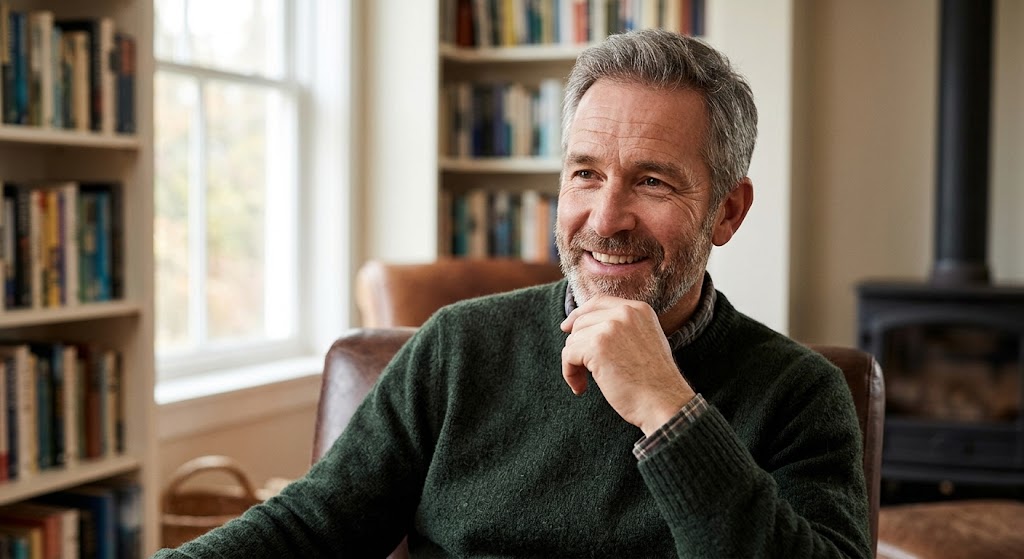
Growing older is one of the few experiences everyone goes through, but the lessons that come with age are not always easy to accept. At a younger age, many people believe life will eventually fall into place. They imagine that they will achieve their dreams by a certain age, have enough money to live comfortably, build meaningful relationships, and become the people they have always wanted to be.
However, as the years pass, many discover that life rarely follows the plans they made for themselves.
Some friendships disappear. Relationships change. Financial responsibilities increase, and the things that once seemed important gradually lose their meaning. You may even reach a point where you begin to question some of the decisions you made when you were younger.
These experiences can be painful, but they also teach valuable lessons.
Growing older is not simply about celebrating another birthday or watching the number of years increase. It is also about developing a different understanding of yourself, other people, and the world around you.
Here are some important lessons many people learn as they grow older.
Not Everyone Who Starts With You Will Finish With You
One of the most difficult lessons of adulthood is accepting that some people will only be part of your life for a particular season.
When you are younger, you may imagine that the friendships you build will last forever. You share secrets, make promises, laugh together, and picture yourselves remaining close for many years.
But life changes people.
Some friends move away, others become occupied with family and work, and some relationships gradually fade without a serious disagreement.
You may also discover that certain people were only comfortable being around you during a particular stage of your life.
Although losing friendships can hurt, not every ending means someone was a bad person. Sometimes, people simply grow in different directions.
As you grow older, you begin to understand that the quality of your relationships matters more than the number of people around you.
Having a few genuine friends who support, respect, and appreciate you can be more valuable than maintaining numerous relationships that leave you feeling lonely.
You Cannot Please Everybody
Many people spend a significant part of their lives trying to make everyone happy.
They worry about what relatives will say, how friends will react, whether colleagues will approve of their decisions, and what strangers might think about their choices.
Sometimes, the desire to be accepted becomes so strong that people begin making decisions that do not reflect what they genuinely want.
They may remain in uncomfortable situations, hide their opinions, or abandon personal goals simply to avoid criticism.
Growing older teaches you that approval is not something you can obtain from everyone.
Even when you make thoughtful decisions, someone may disagree with you. Even when you treat people kindly, not everyone will appreciate your efforts.
This does not mean you should become inconsiderate or refuse to accept advice. It means learning to distinguish between constructive criticism and the pressure to live according to other people’s expectations.
You can respect people without allowing their opinions to determine every decision you make.
Sometimes, peace begins when you stop explaining yourself to people who have already decided to misunderstand you.
Time Is More Valuable Than You Realise
When you are younger, it can feel as though there will always be enough time to do everything you want.
You postpone important conversations, delay personal goals, ignore opportunities, and assume that you can always start tomorrow.
But as the years pass, you become more aware that time cannot be recovered once it is gone.
You may look back and realise that you spent too much time worrying about things that never happened or trying to prove yourself to people whose opinions did not matter in the long run.
This realisation can change the way you approach life.
You begin to appreciate ordinary moments, such as conversations with loved ones, quiet evenings, good health, and opportunities to learn something new.
You also become more conscious of how you spend your days.
Rather than constantly waiting for the perfect moment, you begin to understand the importance of taking reasonable steps toward your goals with the time and resources available to you.
The lesson is not that you must rush through life. It is that you should avoid postponing everything that matters until an uncertain future.
Money Matters, but It Is Not Everything
As people grow older, their understanding of money often changes.
At a younger age, earning a large income may seem like the ultimate measure of success. You may imagine that once you have enough money, every problem will disappear.
Adulthood reveals a more complicated reality.
Money is important because it helps people meet their needs, care for their families, access healthcare, and prepare for unexpected expenses.
Financial difficulties can create genuine stress, and pretending otherwise does not help anyone.
However, money alone cannot guarantee peace of mind, healthy relationships, good health, or emotional fulfilment.
Some people earn well but struggle with loneliness. Others achieve financial success but remain dissatisfied because they constantly compare themselves with people who have more.
Growing older can teach you to pursue financial stability without allowing money to become the only thing that defines your life.
You begin to appreciate budgeting, saving when possible, making informed financial decisions, and building a life that is sustainable rather than impressive only from the outside.
True progress involves improving your financial situation while also protecting your health, relationships, and personal values.
Your Health Deserves Attention Before Something Goes Wrong
Many people take their health for granted when they are younger.
They ignore persistent symptoms, sleep poorly, neglect physical activity, eat without considering balance, or continue working even when their bodies need rest.
Sometimes, they assume that because they feel fine, everything must be fine.
With age and experience, many people begin to recognise the importance of taking care of their bodies before a serious problem develops.
Regular physical activity, adequate sleep, balanced meals, preventive healthcare, and appropriate medical check-ups can all contribute to better health.
It is also important to pay attention to symptoms that persist, worsen, or interfere with daily activities rather than dismissing every problem as stress or tiredness.
Of course, health needs differ from person to person, and getting older does not automatically mean becoming ill.
The important lesson is that your health should not always come last on your list of priorities.
You can work toward your ambitions while making room for rest, medical care, and habits that support your long-term well-being.
Not Every Relationship Is Meant to Last Forever
Relationships can teach some of life’s most difficult lessons.
You may enter a relationship believing that love alone will solve every problem. You may overlook warning signs because you are afraid of losing someone or because you believe things will eventually improve.
Over time, you may discover that a healthy relationship requires more than feelings.
Respect, honesty, communication, responsibility, and compatible expectations all matter.
You may also learn that loving someone does not mean accepting every behaviour or sacrificing your entire identity to keep the relationship alive.
Some relationships end despite the efforts of the people involved. Others become stronger because both individuals are willing to learn, communicate, and make necessary changes.
Growing older can help you recognise that being in a relationship is not automatically better than being single.
It is possible to be alone and at peace, just as it is possible to be surrounded by people and feel deeply unhappy.
The goal should not simply be to find someone. It should be to build relationships in which both people can experience respect, care, and emotional security.
Your Parents and Family Members Are Human Beings Too
As children, many of us see our parents and older relatives as people who should always know what to do.
They appear strong, experienced, and capable of solving problems.
As we grow older, however, we begin to understand that our parents were also learning how to navigate life.
They had fears, financial pressures, disappointments, personal limitations, and decisions they may have wished they could change.
This realisation can help us develop a more mature understanding of family relationships.
We may begin to appreciate sacrifices we did not recognise as children. We may also understand that some family members made mistakes that affected us.
Appreciating your family does not require pretending that every experience was perfect or excusing harmful behaviour.
It means recognising that people are complicated and that understanding the past can sometimes help us make healthier decisions in the present.
Where relationships are safe and supportive, growing older may also encourage us to spend more intentional time with the people who have been there for us.
Comparing Your Life With Others Can Rob You of Happiness
One person gets married at 25. Another buys a house at 30. Someone else starts a successful business, travels abroad, or reaches a professional milestone that you have been working toward for years.
When you see these achievements, it can be difficult not to wonder whether you are falling behind.
Social media can make this feeling even stronger because people often share their celebrations without showing every difficulty that came before them.
You may compare your private struggles with someone else’s carefully selected highlights and conclude that your life is not progressing.
Growing older can teach you that people do not all follow the same path.
Some achieve certain goals early, while others take longer. Some change careers, begin again after disappointment, or discover interests they never expected to pursue.
There is no single timetable that guarantees a meaningful life.
Instead of measuring your progress entirely against other people’s achievements, consider whether you are learning, becoming more responsible, improving your circumstances, and moving toward goals that genuinely matter to you.
Someone else’s success does not automatically mean you have failed.
You can celebrate another person’s progress while continuing to build your own life.
Protecting Your Peace Sometimes Requires Setting Boundaries
As you grow older, you may become less willing to participate in unnecessary arguments, endless drama, or relationships that repeatedly leave you emotionally exhausted.
This does not necessarily mean you have become proud or unfriendly.
It may mean you have begun to recognise the importance of boundaries.
Boundaries help you communicate what you can accept, what you cannot accept, and how you expect to be treated.
For example, you can love a family member without agreeing to every request. You can support a friend without becoming responsible for solving all their problems. You can disagree with someone without allowing the disagreement to consume your entire day.
Healthy boundaries are not about controlling other people. They are about making reasonable decisions regarding your own time, energy, and participation.
Learning to say no when necessary can be difficult, especially when you are accustomed to making everyone else comfortable.
However, you do not have to exhaust yourself to prove that you care about people.
Failure Does Not Mean Your Life Is Over
One of the painful experiences of adulthood is discovering that some plans will not work out as expected.
A business may fail. A job opportunity may disappear. A relationship may end. An examination may not produce the result you hoped for.
When these things happen, it is easy to feel that you have wasted your time or lost your chance to succeed.
But failure is an experience, not a complete definition of who you are.
It can reveal weaknesses in your plans, show you what needs improvement, and encourage you to reconsider your approach.
Sometimes, moving forward requires accepting responsibility for mistakes. At other times, it means recognising circumstances you could not control.
Either way, one disappointment does not have to determine the rest of your life.
You may need time to recover, seek advice, learn new skills, or develop a different plan.
Growing older can help you understand that starting again is not always a sign of weakness. Sometimes, it is a necessary part of moving forward.
You Begin to Value Peace Over Unnecessary Competition
When you are younger, it can be tempting to treat life as a competition.
You want to prove that you are doing well, show people that you are progressing, and demonstrate that your decisions were worthwhile.
This desire can motivate you to work hard, but it can also create pressure when your sense of achievement depends entirely on being ahead of someone else.
Eventually, you may begin to ask different questions.
Are you comfortable with the life you are building? Do your daily decisions reflect your values? Are your relationships healthy? Can you enjoy your achievements without constantly searching for someone to compare yourself with?
These questions can change your understanding of success.
You may become less interested in impressing strangers and more interested in building a stable life.
You may prefer meaningful conversations to unnecessary arguments, responsible financial choices to expensive displays, and genuine friendships to relationships maintained only for appearances.
Peace does not mean abandoning ambition. It means pursuing your goals without allowing constant competition to control your happiness.
You Are Responsible for the Life You Want to Build
As people grow older, they often realise that waiting for someone else to change their circumstances can lead to frustration.
Family support, friendships, mentorship, and opportunities can make an enormous difference. No one succeeds entirely without the influence of other people or the circumstances around them.
Nevertheless, there are decisions that each person must eventually make for themselves.
You may need to develop new skills, improve your spending habits, leave an unhealthy situation, seek professional help, or take the first step toward a goal you have postponed for years.
Taking responsibility does not mean blaming yourself for every difficulty. Some challenges arise from economic hardship, discrimination, illness, family responsibilities, or circumstances beyond an individual’s control.
It means identifying the areas where you have some influence and taking realistic steps to improve them.
You may not be able to change everything overnight, but small, consistent decisions can gradually change the direction of your life.
Happiness Is Often Found in Ordinary Moments
Many people spend years believing happiness will begin after a major achievement.
They tell themselves they will relax when they get a better job, feel satisfied when they earn more money, or finally enjoy life when every problem has been solved.
But life rarely reaches a point where every responsibility disappears.
There will always be something to work toward, something to improve, or something that requires attention.
Growing older can help you recognise the value of ordinary moments.
A peaceful evening, a meaningful conversation, a meal shared with people you love, the ability to move without pain, or a day without unnecessary stress can all be worth appreciating.
This does not mean you should abandon your ambitions or pretend that serious problems do not exist.
It means learning to recognise the good things that are already present while continuing to work toward a better future.
Happiness does not have to be postponed until your life looks perfect.
You Never Stop Learning About Yourself
You may think you understand yourself completely at a certain age, only to discover that your priorities change as you gain new experiences.
The things that once excited you may no longer matter as much. You may discover new interests, become more confident about your values, or recognise patterns in your behaviour that you previously overlooked.
You may also become more comfortable admitting that you do not know everything.
Personal growth involves asking difficult questions, listening to constructive feedback, learning from mistakes, and remaining open to new information.
Age can bring experience, but it does not automatically make someone wise. Wisdom often develops when people reflect honestly on their experiences and apply what they have learned.
You are allowed to change your mind when you discover better information. You are allowed to pursue a different career, develop new friendships, or reconsider goals that no longer fit your circumstances.
Growing older does not mean you must remain the person you were ten years ago.
It gives you more opportunities to understand the person you are becoming.
Growing Older Is About More Than the Years You Have Lived
Growing older changes the way many people understand friendship, money, love, health, family, success, and happiness.
Some lessons arrive gently through experience. Others come through disappointment, difficult decisions, or moments when life does not go according to plan.
You may lose relationships you thought would last forever. You may discover that certain dreams need to be reconsidered. You may realise that the approval you spent years chasing was never as important as you believed.
But growing older can also bring greater self-awareness, stronger boundaries, deeper appreciation, and a clearer understanding of what matters most.
The goal is not to reach a particular age without making mistakes. It is to learn from your experiences and become more thoughtful about the decisions you make.
You do not have to have everything figured out at 25, 30, 40, or 60. Life is not a race in which everyone must reach the same milestones at the same time.
What matters is that you continue to learn, take care of yourself, treat others with consideration, and make room for the things that give your life meaning.
Perhaps one of the greatest lessons of growing older is this: you cannot control every experience life brings your way, but you can keep learning how to respond to it.
And sometimes, the real beauty of getting older is discovering that you no longer need to prove everything to everyone. You simply want to live a life that feels meaningful, peaceful, and true to who you are.


