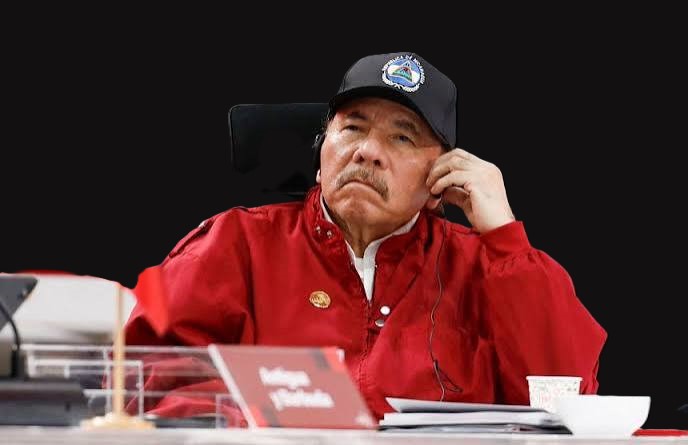
Nicaragua’s President Daniel Ortega has announced that the country will no longer hold elections, a move he says is necessary to prevent opposition groups from returning to power.
Speaking during celebrations marking the 47th anniversary of the Sandinista Revolution, Ortega revealed that his administration will work with the National Assembly to introduce new laws aimed at blocking opposition movements, which he accused of being coup plotters and traitors.
“There will be no more elections here so that they can try to seize the government and seize power,” Ortega told thousands of state employees gathered at the event.
The 80-year-old leader, who has been in power since 2007, did not explain whether the scheduled 2027 presidential election would be cancelled outright or if opposition parties would simply be prevented from participating.
Nicaragua’s last presidential election in 2021 was widely criticised after opposition parties were banned and several presidential hopefuls were arrested before the polls.
Political analysts say Ortega’s latest announcement marks a major turning point for the Central American nation. Tiziano Breda, a senior analyst with the Armed Conflict Location and Event Data (ACLED), described the move as effectively cementing Nicaragua’s transition into what he called a family dictatorship led by Ortega and his wife, Rosario Murillo, who became co-president following constitutional reforms introduced last year.
During his speech, Ortega defended his decision by blaming opposition groups for the 2018 anti-government protests, which his administration has consistently labelled an attempted coup.
However, human rights organisations and the United Nations have accused the government of violently suppressing those demonstrations. Reports indicate that hundreds of people were killed, thousands were arrested, and nearly one million citizens fled the country in the aftermath of the unrest.
Ortega also used the occasion to criticise the United States, accusing Washington of carrying out what he described as a “monstrous” operation against Venezuelan President Nicolás Maduro.
His administration continues to face widespread international criticism over its human rights record. Rights groups say dozens of political prisoners remain behind bars, hundreds of citizens have been stripped of their nationality, and thousands of non-governmental organisations, independent media outlets, and universities have been shut down under Ortega’s government.
The announcement is expected to draw fresh international attention to Nicaragua’s political future and further intensify concerns about democracy and civil liberties in the country.