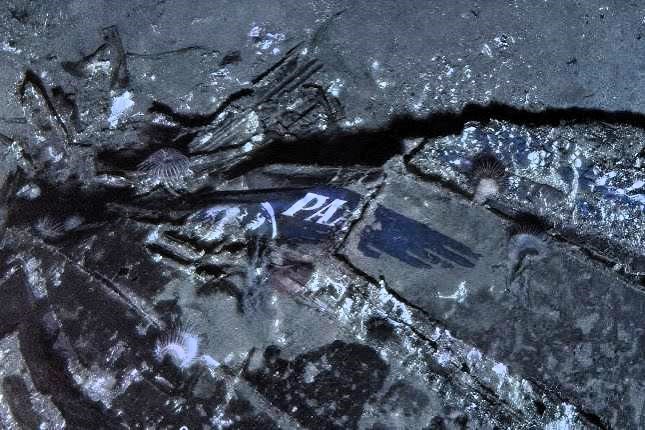
the wreckage of a Pan American Airways aircraft that disappeared beneath the Atlantic Ocean more than seven decades ago has finally been located, bringing closure to one of aviation’s most tragic accidents.
The aircraft, Clipper Endeavor, was en route to New York on April 11, 1952, when it experienced multiple engine failures shortly after takeoff from Puerto Rico. With no safe alternative, the crew was forced to make an emergency landing on the ocean.
Although everyone on board survived the initial impact, the aircraft quickly sank beneath the waves. Many passengers were pulled underwater before they could escape, turning what had begun as a successful ditching into a devastating tragedy. Of the 69 passengers and crew aboard, only 17 survived.
After decades of uncertainty, an expedition led by the Air/Sea Heritage Foundation, working alongside the Discovery Channel’s Expedition Unknown and several partner organizations, has located the aircraft approximately 2,000 feet below the surface off the coast of Puerto Rico.
The breakthrough came after researchers uncovered historical records from a public hearing in Puerto Rico, including a hand-drawn map created by U.S. Air Force pilots who witnessed the crash. Combined with archived weather information, the evidence helped narrow the search to a 10-square-nautical-mile area.
Using an autonomous underwater drone, the search team first detected the aircraft’s fuselage and tail section before identifying the remaining wreckage, which had split into two pieces. The discovery was made on June 2, 2026.
A follow-up photographic survey confirmed the identity of the wreck by capturing clear images of the iconic Pan Am logo and the name Clipper Endeavor still visible on the fuselage.
“We are all stunned and elated by this discovery, yet also humbled to remember what happened in that place so long ago,” said Russ Matthews, president of the Air/Sea Heritage Foundation.
Josh Gates, host of Expedition Unknown, described witnessing the discovery as an unforgettable experience.
“To have a front-row seat to an expedition like this as it’s unfolding is tremendous, and so I feel really lucky that we were able to be a part of it,” he said.
Beyond its historical significance, the Clipper Endeavor disaster had a lasting impact on commercial aviation. The tragedy prompted major improvements to airline safety procedures, including mandatory pre-flight safety demonstrations that explain the locations of emergency exits, life vests, and how to use them during an emergency.
Reflecting on the crash’s legacy, Gates noted that the lessons learned from the disaster continue to protect travelers today.
“Every time you step onboard an airplane today, you are safer because of what happened to Clipper Endeavor and her passengers three-quarters of a century ago,” he said.
The discovery not only sheds light on a long-lost chapter of aviation history but also serves as a powerful reminder of the lives lost and the safety improvements that emerged from the tragedy.
Julian Daily Gist Editorial Team
Julian Daily Gist Editorial Team is the team responsible for researching, writing, editing, and publishing news and feature content on Julian Daily Gist. Our coverage includes Nigerian current affairs, lifestyle, entertainment, sports, health, business, and human-interest stories. We aim to provide readers with timely, accurate, and responsibly sourced information.
The Julian Daily Gist Editorial Team researches, writes, edits, and publishes news and feature content covering Nigerian current affairs, entertainment, sports, health, business, lifestyle, and human-interest stories.
We aim to provide accurate, timely, and responsibly sourced information and update our reports when credible new information becomes available.
The Julian Daily Gist Editorial Team is responsible for researching, writing, editing, and publishing content across Julian Daily Gist.
Our coverage includes Nigerian current affairs, politics, business, entertainment, sports, health, lifestyle, and human-interest stories.
We aim to provide readers with timely, accurate, useful, and responsibly sourced information. Our team makes reasonable efforts to verify important information, identify sources, distinguish allegations from confirmed facts, and update reports when credible new information becomes available.
We also believe in transparency and accountability. Readers can contact our editorial team to report factual errors, request corrections, or provide additional information relevant to a published story.
Editorial focus: News, current affairs, lifestyle, entertainment, sports, health, business, and human-interest stories.
Team BIo:
The Julian Daily Gist Editorial Team is responsible for researching, writing, editing, and publishing content across Julian Daily Gist.
Our coverage includes Nigerian current affairs, politics, business, entertainment, sports, health, lifestyle, and human-interest stories.
We aim to provide readers with timely, accurate, useful, and responsibly sourced information. Our team makes reasonable efforts to verify important information, identify sources, distinguish allegations from confirmed facts, and update reports when credible new information becomes available.
We also believe in transparency and accountability. Readers can contact our editorial team to report factual errors, request corrections, or provide additional information relevant to a published story.
Editorial focus: News, current affairs, lifestyle, entertainment, sports, health, business, and human-interest stories.
Editorial Policy:
At Julian Daily Gist, our goal is to provide readers with timely, useful, accurate, and responsibly presented news and information.
We cover Nigerian current affairs, politics, business, entertainment, sports, health, lifestyle, human-interest stories, and other topics of interest to our readers.
1. Accuracy and Verification
We make reasonable efforts to ensure that information published on Julian Daily Gist is accurate and presented in its proper context.
Before publishing a report, our editorial team makes reasonable efforts to:
- Check information against credible sources.
- Verify names, dates, locations, figures, and other important details.
- Attribute information to the appropriate source.
- Distinguish confirmed facts from allegations, claims, opinions, and speculation.
- Update stories when credible new information becomes available.
When information cannot be independently verified, we make this clear to readers rather than presenting it as established fact.
2. Sources
We use a range of sources, including:
- Official government statements.
- Police and security agencies.
- Courts and legal documents.
- Government agencies.
- Direct interviews and statements.
- Reputable news organizations.
- Publicly available records.
- Verified social media accounts and statements.
When an article relies substantially on information reported by another publication, we aim to clearly attribute the information to that source.
We do not intentionally present another publication's reporting as our own.
3. Originality
Julian Daily Gist aims to provide original editorial value.
When we report information that has already been published elsewhere, we seek to add value through original writing, context, verification, analysis, additional information, or other useful material.
We do not intentionally copy and republish articles from other websites without appropriate attribution and meaningful editorial contribution.
4. Allegations and Sensitive Claims
When reporting allegations involving individuals or organizations, we make reasonable efforts to clearly identify allegations as allegations.
We avoid presenting unproven accusations as established facts.
Where relevant, we seek or include responses from the person, organization, or representative concerned.
For criminal matters, we recognize that an allegation, arrest, charge, or accusation does not by itself establish guilt.
5. Headlines
Our headlines are intended to accurately reflect the content of our articles.
We aim to avoid deliberately misleading headlines, fabricated claims, or headlines that exaggerate facts simply to generate clicks.
6. Corrections and Updates
We take corrections seriously.
If we discover that an article contains a significant factual error, we may correct or update the article as appropriate.
Readers who identify an error are encouraged to contact us with specific information supporting the correction.
Where appropriate, significant corrections or updates may be noted within the article.
7. Editorial Independence
Editorial decisions are made independently of advertisers, sponsors, commercial partners, and other external interests.
Advertising or sponsorship does not automatically influence our editorial decisions or the opinions expressed by our writers.
8. Sponsored and Promotional Content
Where Julian Daily Gist publishes sponsored, paid, or promotional content, we aim to clearly identify it as such.
Sponsored content does not necessarily represent the independent editorial views of Julian Daily Gist.
9. Conflicts of Interest
Our editorial team should avoid situations where personal, financial, or other interests could improperly influence reporting.
Where a relevant conflict of interest exists, we aim to disclose it when appropriate.
10. Use of Images and Other Media
We aim to use images, videos, graphics, and other media responsibly and with appropriate permission, licensing, attribution, or other lawful basis where required.
We do not knowingly use copyrighted material in a manner that infringes the rights of its owner.
If you believe that material published on Julian Daily Gist infringes your copyright, please contact us so that we can review the matter.
11. Artificial Intelligence
We may use technology and artificial intelligence tools to assist with certain editorial tasks, such as research support, proofreading, formatting, transcription, or drafting assistance.
However, AI-generated information is not treated as automatically accurate. Content remains subject to human review, editing, fact-checking, and editorial judgment before publication where appropriate.
We do not intentionally publish fabricated information generated by AI.
12. Privacy and Personal Information
We take reasonable care when handling personal information and avoid publishing unnecessary private information about individuals.
Sensitive personal information is published only when there is a legitimate public-interest reason and where appropriate.
Our handling of visitor information is explained in our Privacy Policy.
13. Opinion and Commentary
Opinion articles and commentary represent the views expressed by the respective writer or contributor.
Where appropriate, opinion content will be identified as commentary, analysis, or opinion so that readers can distinguish it from straightforward news reporting.
14. User-Generated Content
Comments and other material submitted by readers may be moderated.
We reserve the right to remove content that is unlawful, defamatory, abusive, discriminatory, misleading, threatening, spam-related, or otherwise inappropriate.
User comments do not necessarily represent the views of Julian Daily Gist.
15. Our Commitment
We are committed to improving the quality, accuracy, transparency, and usefulness of Julian Daily Gist.
As our publication grows, we will continue reviewing our editorial practices and updating this policy when necessary.
16. Contact and Corrections
If you have a correction, clarification, complaint, copyright concern, or question about our editorial practices, please contact us through our Contact Us page.
Julian Daily Gist Editorial TeamComments Off on Goodluck Jonathan Urges Nigerians to Reject Bad Political Behavior, Criticizes Military Involvement in Elections
Julian Daily Gist Editorial TeamComments Off on “It was my mother’s choice to suffer with a broke man,” Blessing Okoro says as she advices women to stop suffering with men