
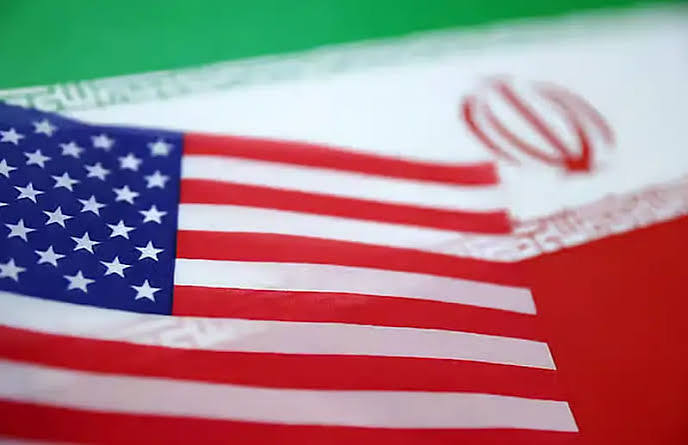
A US official said on Sunday that Washington and Tehran had agreed to halt attacks after fresh tit-for-tat strikes threatened their interim agreement, with both sides expected to resume talks aimed at ending the Middle East war.
The exchanges underscored the fragility of the Pakistan-brokered agreement to end the conflict, which has killed thousands and disrupted oil shipments through the strategic Strait of Hormuz. Although a ceasefire took effect in April, sporadic violence has continued in the Gulf region, with maritime traffic through the strait remaining a recurring flashpoint.
“Technical talks are slated to continue on all areas of the MOU,” a US official told AFP in an email late Sunday, referring to the memorandum of understanding reached between Washington and Tehran.
“Both sides will stand down for now, and vessels can move freely in and around the Strait of Hormuz,” the official added.
Iran did not immediately comment on the US statement, and the US official declined to confirm media reports that negotiations would resume on Tuesday in Qatar.
Tehran has insisted on controlling passage through the strategic waterway, which handles about one-fifth of the world’s oil and liquefied natural gas shipments during peacetime. It did not exercise such control before the war.
Iran’s top diplomat warned on Sunday that any attempt by ships to bypass its preferred route through the Strait of Hormuz would only “increase tensions” in the Middle East.
Although the strait comprises both Omani and Iranian territorial waters, customary international law generally prevents either country from blocking passage or imposing tolls.
Nevertheless, Iran restricted the movement of most ships through the narrow waterway during the war, giving it significant economic leverage that it now appears reluctant to relinquish.
Tehran’s enforcement of its control has triggered repeated confrontations with Washington. The latest occurred early Sunday, when US Central Command said it had struck 10 Iranian military targets in response to what it described as “continued Iranian aggression against commercial shipping.” Iran said it retaliated by launching strikes on US bases in Kuwait and Bahrain. Both countries condemned the attacks.
‘Hegemonic dreams’
Iran continues to insist that vessels transiting the strait use a corridor close to its coastline, although dozens of ships this week have sailed along the Omani side of the waterway.
“Any attempt to adopt new or separate arrangements compared to what is underway by the Islamic Republic of Iran will only lead to more complicated situations and delays in the reopening of the Strait of Hormuz, and will increase tensions,” Iranian Foreign Minister Abbas Araghchi said.
The published text of the memorandum states that Iran will determine the future administration of the strait through consultations with Oman and other Gulf states, while remaining in line with international law.
Iran’s Revolutionary Guards said they were implementing measures to regulate traffic through the strait and warned that vessels violating those rules would face tougher enforcement than before.
Mohammad Mokhber, an adviser to Iran’s Supreme Leader, wrote on X that as long as Iran controlled the strait, Washington’s “hegemonic dreams in the region will not be realised.”
Analysts believe further incidents in the Strait of Hormuz remain likely.
For Iran, “a drawn-out negotiation accompanied by controlled pressure in the strait can work to its advantage,” said HA Hellyer of the Royal United Services Institute, a London-based think tank.
While the recent exchanges have largely occurred without reported casualties, Qatar’s Interior Ministry said one of its citizens was killed aboard a boat after being struck by shrapnel from “military operations in the area.”
Israel strikes Lebanon
The Israeli military said it destroyed an extensive tunnel in southern Lebanon on Sunday. Lebanese state media reported Israeli strikes in the area, while Iran-backed Hezbollah said it reserved the right to respond.
“The tunnel, stretching more than 200 metres and reaching a depth of over 25 metres, contained hundreds of weapons as well as several launch shafts intended to target the State of Israel,” Israeli Prime Minister Benjamin Netanyahu and Defence Minister Israel Katz said in a joint statement.
Hezbollah condemned the operation, saying it “reiterates that what the enemy has done is a blatant violation of the ceasefire to which it has adhered until now, and that it is monitoring and tracking these violations, and reserves its right to defend its homeland and its people.”
Lebanon was drawn into the Middle East conflict in early March after Hezbollah launched rockets at Israel in support of Iran, prompting Israel to respond with heavy airstrikes and a ground offensive.
Tehran has maintained that Lebanon must be included in any broader peace agreement aimed at ending the Middle East war.