
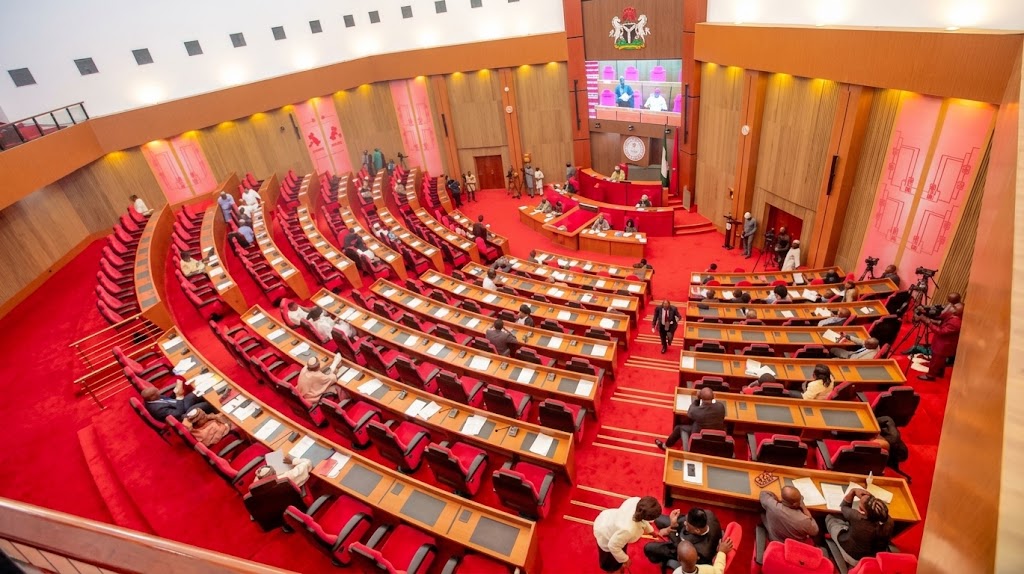
The Nigerian Senate has renewed its commitment to completing legislation for the establishment of state police before the end of 2026, as efforts to reform the country’s security system gather momentum ahead of the 2027 general elections.
The development comes amid continued concerns over insecurity in different parts of Nigeria, including kidnapping, banditry, terrorism, and violent attacks on communities. The proposed state police system is expected to bring policing closer to local communities and improve the ability of security agencies to respond to threats.
According to reports published on Tuesday, October 27, the Senate said it remained committed to concluding the legislative process before lawmakers proceed on their Christmas break. The assurance was given by Yemi Adaramodu, Chairman of the Senate Committee on Media and Public Affairs.
Adaramodu explained that the proposed state police legislation remained a priority for the National Assembly. He expressed confidence that the process would move forward once the necessary documents and proposals were formally received from the executive arm of government.
The renewed commitment follows progress in the constitutional amendment process, with the required number of state Houses of Assembly having approved the proposal to establish state police services.
The Ondo State House of Assembly recently joined other state legislatures in approving the constitutional amendment, bringing the number of supporting assemblies above the constitutionally required threshold of 24 out of Nigeria’s 36 states.
This approval represents an important step towards changing the country’s policing structure. However, the process still requires the relevant legislative procedures to be completed before the proposed system can become operational.
The state police proposal seeks to amend the 1999 Constitution to provide for a Federal Police Service alongside State Police Services. If fully approved and implemented, the arrangement would introduce a decentralised policing structure in which states could establish their own police services under a legal framework.
Supporters of the proposal argue that Nigeria’s size and diverse security challenges make it necessary to strengthen policing at the state and community levels.
They believe officers working within their own states could develop a better understanding of local communities, identify suspicious activities more effectively, and gather intelligence that could help prevent criminal activities.
For communities affected by repeated kidnappings and attacks, the proposal has raised hopes that a more locally responsive security system could improve protection and reduce the time required to respond to emergencies.
Senator Victor Umeh, who represents Anambra Central, has also expressed support for decentralised policing, arguing that a country as large as Nigeria requires security arrangements capable of responding to the different challenges facing individual communities.
The proposal has attracted attention because insecurity remains a major concern for residents, businesses, farmers, travellers, and local communities across the country.
In some areas, fear of attacks has disrupted farming activities, affected commercial transportation, and forced residents to reconsider their movements. Businesses operating in insecure locations may also face higher operating costs as they attempt to protect their workers and property.
Supporters of state police believe that giving states greater responsibility for policing could improve intelligence gathering and help security agencies respond more quickly to incidents.
However, the proposed reform has also raised questions about accountability, funding, recruitment, and the possibility of political interference.
One of the major concerns is whether state governors could misuse their influence over local police services to target political opponents, journalists, protesters, or other individuals critical of their administrations.
These concerns have made safeguards an important part of the debate surrounding the proposed legislation.
For state police to operate effectively, the legal framework will need to establish clear rules governing recruitment, training, operational independence, public complaints, investigations, and disciplinary procedures.
There will also need to be clear arrangements for cooperation between federal and state police services, particularly when criminal activities cross state boundaries or involve organised criminal networks.
Funding is another important consideration. Establishing and maintaining police services requires financial resources for salaries, vehicles, communication equipment, training facilities, and other operational needs.
States would therefore need to consider how they could finance their police services without placing excessive pressure on their budgets or neglecting other essential public services.
The federal government and the National Assembly also have important responsibilities in ensuring that the proposed system operates within the Constitution and respects the rights of citizens.
Meanwhile, the Presidential Working Group on the National Policing Bill has submitted a draft National Policing Bill, 2026, alongside related amendment bills, to the Ministry of Justice for legislative drafting review and validation.
The proposed framework is expected to provide further details on how the new policing structure could operate. The documents must proceed through the appropriate stages before the proposed arrangements can be finalised.
Although the Senate has expressed confidence that the legislation will be completed before the end of the year, the final outcome will depend on the completion of the required legal and legislative procedures.
The development is particularly significant as Nigeria prepares for the 2027 general elections. Security will be an important consideration during the electoral period, when political activities, campaigns, rallies, and voting arrangements require effective protection.
However, the proposed state police system should not be viewed as an immediate solution to every security challenge facing the country. Its effectiveness would depend on the quality of its implementation, the independence of its officers, adequate funding, and cooperation between different security agencies.
For Nigerians, the key question is whether the proposed reform will translate into improved security in their communities rather than remain another legislative promise.
Residents will be watching closely to see whether the National Assembly meets its stated deadline and whether the final legislation provides sufficient safeguards against abuse.
As discussions continue, the establishment of state police remains one of the most closely watched proposals in Nigeria’s ongoing security reform efforts.
The coming weeks will be important in determining whether the Senate can fulfil its commitment to complete the process before the end of 2026.
For now, Nigerians await further developments as lawmakers and government officials work towards a new legal framework intended to strengthen policing and address the country’s persistent security challenges.


