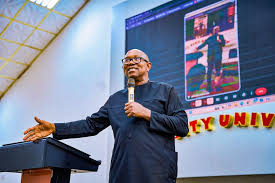
Labour Party’s 2023 presidential candidate, Peter Obi, has defended Pastor Enoch Adeboye against recent criticisms over his alleged role in the cancellation of a planned protest, while warning Nigerians against narratives that could deepen ethnic and social divisions.
In a statement posted on his verified X account on Thursday, Obi said Nigerians must learn from the experiences of the 2023 elections, particularly in Lagos, where political discourse, according to him, shifted from issues of governance and competence to ethnic and tribal sentiments. He added that conversations that should have focused on development and the future of the country were instead diverted into divisive debates that weakened national cohesion.
“Throughout history, whenever politicians find it difficult to compete on ideas, performance, character, or vision, some resort to exploiting the fault lines of ethnicity, religion, and identity,” Obi said.
He warned that similar tactics were beginning to re-emerge ahead of future political contests, with narratives being deliberately amplified to create suspicion and division among citizens.
The former Anambra State governor said many people unknowingly become participants in campaigns designed to pit Nigerians against one another.
Addressing criticisms directed at Adeboye, Obi described the cleric as one of the nation’s foremost religious leaders whose message over the decades has consistently centred on peace, prayer, reconciliation, and national unity.
“Let me state clearly that Pastor Enoch Adeboye remains one of the foremost fathers of faith in our nation. For decades, he has consistently preached the virtues of peace, prayer, love, reconciliation, and national unity,” he stated.
Obi added that even in the face of criticism and provocation, Adeboye had continued to respond with “humility, restraint, wisdom, and grace.”
The former presidential candidate also argued that younger Nigerians should not place the burden of solving the country’s challenges on elderly leaders, stressing that responsibility for driving reforms and national development rests largely with the younger generation.