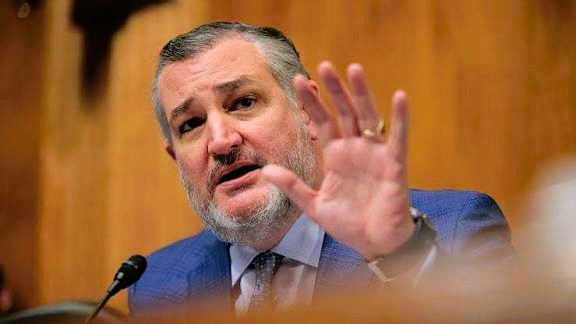
United States Senator Ted Cruz has criticised the administration of President Bola Tinubu over Nigeria’s decision to hire a US-based lobbying firm to communicate its security efforts to American officials, describing the move as an attempt to manage public perception rather than address concerns over attacks on Christians and other vulnerable groups.
Cruz said he was disappointed that the Nigerian government turned to public relations efforts after the country came under increased scrutiny in the United States over its security challenges. He argued that lobbying would not resolve allegations of failures in protecting religious minorities and other citizens affected by violence.
The senator made the remarks while reacting to recent actions by US lawmakers, including measures aimed at increasing pressure on the Nigerian government to take stronger steps against insecurity.
Nigeria’s $9 million lobbying agreement
Nigeria reportedly engaged DCI Group, a Washington-based public affairs and lobbying company, through a $9 million contract signed in December. The agreement came months after US President Donald Trump designated Nigeria a “country of particular concern.”
Documents filed with the US Department of Justice under foreign lobbying regulations showed that Aster Legal, a Kaduna-based law firm, retained DCI Group on behalf of National Security Adviser Nuhu Ribadu.
The lobbying arrangement has attracted criticism from some US lawmakers, who argue that Nigeria should focus more on improving security conditions than on managing its international image.
Cruz, who introduced the proposed “Nigeria Religious Freedom Accountability Act of 2025” in October, said the legislation was designed to hold Nigerian officials accountable for what he described as policies that have contributed to violence against Christians and religious minorities.
In a post on X, the senator alleged that Nigerian authorities had failed to adequately address attacks carried out by jihadist groups and accused officials of attempting to counter criticism through public relations campaigns.
He wrote that US officials were aware of those responsible for policies contributing to insecurity and maintained that accountability measures were necessary.
US lawmakers push for tougher action
Cruz’s comments followed the passage of an amendment by the US House of Representatives that would increase restrictions on certain assistance to Nigeria, requiring stronger action from the government to prevent and respond to violence.
The amendment, approved through a voice vote, proposed increasing the withholding of assistance from 50 per cent to 100 per cent until sufficient measures are taken to address insecurity.
Other American lawmakers have also questioned Nigeria’s lobbying activities.
Chris Smith, chairman of the House Foreign Affairs Africa subcommittee, said the use of lobbying firms suggested that some Nigerian officials continued to deny the scale of the country’s security problems.
During the same period, Matthew Tonlagha, vice-chairman of Tantita Security Services, reportedly hired Valcour Global Public Strategy, another Washington lobbying firm, to strengthen US-Nigeria relations.
Timi Frank accuses Presidency of misrepresenting Trump letter
Meanwhile, former All Progressives Congress (APC) deputy national publicity secretary Timi Frank has accused the Tinubu administration of misleading Nigerians over a reported letter from US President Donald Trump.
Frank claimed that the correspondence was being presented as an endorsement of President Tinubu’s leadership, while, according to him, the document only addressed security cooperation between Nigeria and the United States.
He challenged the Presidency to release the full letter, including official authentication, to prove its credibility.
“The letter is not from the White House. If it does not have the White House seal and the signature of the US President, it appears questionable,” Frank said.
He argued that the message did not represent support for Tinubu’s administration, economic policies, or any future political ambitions.
According to Frank, the letter merely acknowledged cooperation between both countries in tackling insecurity and should not be interpreted as a political endorsement.
Questions over timing of the correspondence
Frank also questioned why the letter, reportedly dated July 6, was only made public weeks later. He argued that if it represented a significant diplomatic achievement, the government would have released it immediately.
He further compared the reported correspondence with former President Muhammadu Buhari’s official visit to the White House during Trump’s first term, describing such direct engagement as a stronger diplomatic signal.
The former APC spokesman also criticised reports that Nigeria had spent millions of dollars on lobbying efforts in Washington, arguing that a government with strong international credibility would not need extensive reputation management campaigns.
Frank maintained that national credibility is built through transparency, accountability, respect for democratic institutions, and effective governance rather than through diplomatic statements or public relations efforts.