Human Immunodeficiency Virus (HIV) remains one of the major public health challenges affecting many countries around the world, including Nigeria. Although significant progress has been made in HIV awareness, testing, and treatment, new infections continue to occur due to several social, behavioural, and healthcare-related factors.
Understanding how HIV spreads, why infections continue to increase in some communities, and the different prevention options available is important for reducing transmission and protecting public health.
What Is HIV?
HIV is a virus that attacks the body’s immune system, particularly the CD4 cells that help the body fight infections. Without proper treatment, HIV can weaken the immune system and may progress to Acquired Immunodeficiency Syndrome (AIDS).
However, with early diagnosis and effective treatment, many people living with HIV can live long and healthy lives.
Why HIV Cases Continue to Spread in Nigeria
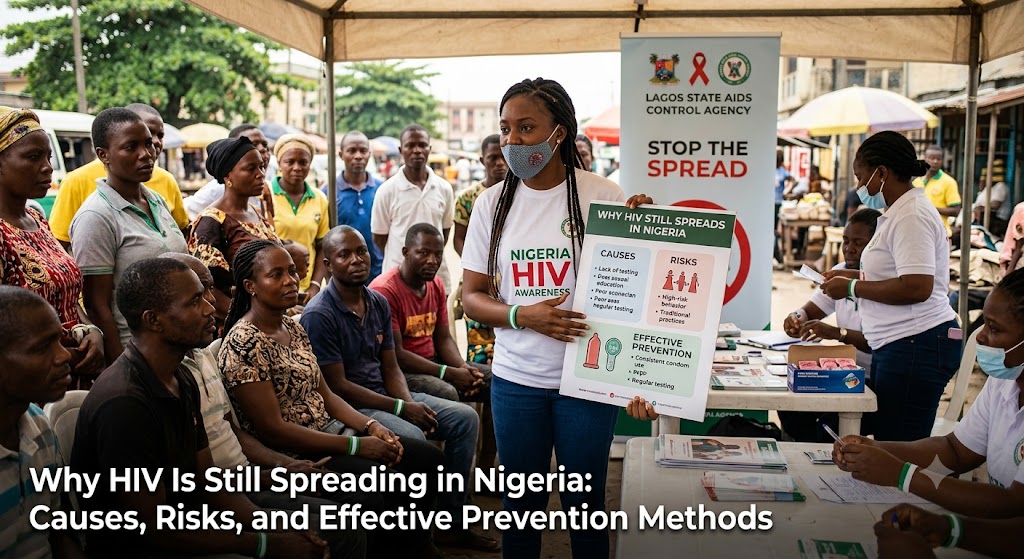
Several factors contribute to the continued spread of HIV in Nigeria. These include:
1. Lack of Awareness and Misunderstanding About HIV
Although HIV education has improved, some people still have limited knowledge about how HIV is transmitted and prevented. Myths and misinformation can lead to risky behaviours and delay testing.
Some people also avoid HIV testing because of fear or stigma, which can increase the chance of unknowingly transmitting the virus.
2. Unprotected Sexual Activity
Sexual transmission remains one of the major ways HIV spreads. Having unprotected sex with an infected person can increase the risk of transmission because the virus can be present in sexual fluids.
Having multiple sexual partners or engaging in sexual relationships without knowing a partner’s HIV status can increase exposure risk.
3. Low Rate of HIV Testing
Many people do not know their HIV status because they have never been tested. Since HIV can exist in the body for years without obvious symptoms, a person may unknowingly pass the virus to another person.
Regular testing helps people know their status and seek treatment early if needed.
4. Stigma Against People Living With HIV
Fear of discrimination can prevent some people from getting tested or accessing treatment. HIV should be viewed as a health condition that requires medical support, not as a reason to judge or isolate anyone.
Reducing stigma encourages more people to seek help.
5. Sharing of Unsterilized Sharp Objects
HIV can also spread through contact with infected blood. Sharing needles, razors, or other sharp objects that may have contaminated blood on them can increase the risk of transmission.
Using personal items such as razors and avoiding the sharing of sharp objects is an important safety practice.
Can HIV Be Prevented?
Yes. HIV prevention involves several approaches, and the best method depends on an individual’s situation and level of risk.
1. Abstinence and Responsible Sexual Decisions
Choosing to abstain from sexual activity completely eliminates the risk of sexual HIV transmission. For people who choose to be sexually active, making informed decisions, maintaining mutually faithful relationships, and practising safer sex can reduce risk.
2. Avoid Sharing Personal Items That May Carry Blood
Personal items such as razors, needles, and other sharp objects should not be shared. Everyone should use their own personal hygiene tools to reduce the risk of blood-borne infections.
3. HIV Testing and Early Treatment
Knowing your HIV status is one of the most important steps in prevention. People who test positive can begin treatment, and effective HIV treatment can reduce the amount of virus in the body to very low levels.
People who maintain an undetectable viral load through treatment do not sexually transmit HIV.
4. HIV Prevention Medicines (PrEP)
New HIV prevention medicines, such as Pre-Exposure Prophylaxis (PrEP), are medications designed for people who may have a higher risk of exposure to HIV. When taken correctly, PrEP can greatly reduce the chance of getting HIV.
However, PrEP is not a replacement for responsible decision-making. It does not prevent other sexually transmitted infections and does not protect against other health risks associated with unsafe sexual behaviour.
For some people, especially those with ongoing risk of HIV exposure, PrEP can be an additional prevention tool alongside other protective measures.
Why Prevention Requires More Than Medication
Although medical advances have provided new tools against HIV, preventing the spread of the virus requires a combination of education, responsible behaviour, testing, and access to healthcare.
Relying on only one prevention method may not address all risks. Personal responsibility, awareness, and making informed choices remain important parts of protecting yourself and others.
The spread of HIV in Nigeria is influenced by many factors, including limited awareness, lack of testing, stigma, unsafe sexual practices, and sharing of contaminated personal items.
The most effective approach to reducing HIV transmission is a combination of education, responsible choices, regular testing, safe practices, and access to proven medical prevention methods when needed.
HIV prevention is not about fear or judgment; it is about knowledge, protection, and making choices that support a healthier future.
Disclaimer: This article is for educational purposes only and does not replace professional medical advice. Anyone seeking HIV prevention or treatment options should consult a qualified healthcare professional.