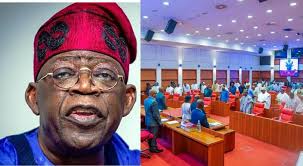
The Federal Government has presented its defense before the Supreme Court, justifying the declaration of a state of emergency in Rivers State. The government argued that the move was necessitated by a complete breakdown of governance and growing threats to critical national economic infrastructure.
In response to a legal challenge filed by 11 states—primarily governed by the opposition Peoples Democratic Party (PDP)—the Federal Government maintained that it had no alternative but to act in the interest of national stability. The plaintiff states—Adamawa, Akwa Ibom, Bauchi, Bayelsa, Delta, Enugu, Osun, Oyo, Plateau, Taraba, and Zamfara—asserted that the declaration of emergency rule in Rivers State was unconstitutional.
However, in a counter-affidavit sworn by Mr. Taiye Hussain Oloyede, Special Assistant to President Bola Ahmed Tinubu and the Federal Ministry of Justice, the Federal Government rejected these claims. “I am a Special Assistant to President Bola Ahmed Tinubu, GCFR. By reason of that, I have been working in close contact with the Hon. Attorney-General of the Federation, the 1st defendant in this case. I have the authority of the President and Chief Akin Olujinmi, CON, SAN, counsel to the 1st defendant, to swear to this counter affidavit,” Oloyede stated.
Oloyede confirmed only paragraphs 1 and 8 of the plaintiffs’ affidavit, while denying the rest on the grounds that they were untrue.
He argued that the political crisis in Rivers State had paralyzed governance. “There was a very serious political crisis in Rivers State which led to a situation where the Governor and the House of Assembly could not work together,” he said. According to the affidavit, the Rivers State House of Assembly was fractured, with only four members aligned with Governor Siminalayi Fubara, while 27 opposed him. This division, he claimed, prevented the governor from presenting an Appropriation Bill, effectively halting the running of government affairs.
The Federal Government also accused Governor Fubara of exacerbating the crisis by demolishing the State House of Assembly building, thereby depriving the majority of lawmakers of a venue to conduct legislative duties. “The governor allowed only the four lawmakers loyal to him to meet in his office,” the affidavit stated.
Further instability was highlighted, including violence and attacks on key economic assets such as oil pipelines. The government claimed the governor failed to address these issues or denounce militant threats against his opponents.
Oloyede added that both the governor and the opposing lawmakers filed numerous legal actions, further deepening the crisis. He referenced a Supreme Court ruling stating, “A government cannot be said to exist without one of the three arms that make up the government of a state… the head of the executive has chosen to collapse the legislature to govern as a despot. As it is, there is no government in Rivers State.”
The affidavit also noted that President Tinubu and other elder statesmen made several unsuccessful efforts to mediate the crisis. “Despite interventions, including the Supreme Court judgment, no progress was made in resolving the impasse. To avoid further deterioration, President Tinubu declared a state of emergency on March 18, 2025,” Oloyede stated.
A certified true copy of the emergency proclamation was submitted as evidence. Oloyede dismissed claims that the President threatened to declare a state of emergency in any of the plaintiff states, calling such fears “imaginary.”
He also refuted the plaintiffs’ interpretation of Section 305(6) of the Constitution, clarifying that it does not mandate a physical count of votes by each house of the National Assembly. “The President acted within constitutional bounds. The National Assembly’s role is to approve or disapprove the declaration—nothing more,” he said.
Oloyede concluded by affirming the President’s commitment to the rule of law. “President Bola Ahmed Tinubu is a firm believer in the rule of law. There was a clear breakdown of public order and safety in Rivers State, necessitating extraordinary measures to restore peace and security.”
Meanwhile, the National Assembly, also named in the suit, has filed a preliminary objection dated April 22. It urged the Supreme Court to dismiss the suit due to procedural irregularities and lack of merit, and demanded N1 billion in legal costs from the plaintiffs, describing the case as “frivolous and speculative.”
The PDP governors are seeking constitutional clarification on whether the President has the authority to suspend or interfere with state governments and legislatures through emergency declarations. They argue such actions violate the principles of constitutional federalism and sections of the 1999 Constitution.
Julian Daily Gist Editorial Team
Julian Daily Gist Editorial Team is the team responsible for researching, writing, editing, and publishing news and feature content on Julian Daily Gist. Our coverage includes Nigerian current affairs, lifestyle, entertainment, sports, health, business, and human-interest stories. We aim to provide readers with timely, accurate, and responsibly sourced information.
The Julian Daily Gist Editorial Team researches, writes, edits, and publishes news and feature content covering Nigerian current affairs, entertainment, sports, health, business, lifestyle, and human-interest stories.
We aim to provide accurate, timely, and responsibly sourced information and update our reports when credible new information becomes available.
The Julian Daily Gist Editorial Team is responsible for researching, writing, editing, and publishing content across Julian Daily Gist.
Our coverage includes Nigerian current affairs, politics, business, entertainment, sports, health, lifestyle, and human-interest stories.
We aim to provide readers with timely, accurate, useful, and responsibly sourced information. Our team makes reasonable efforts to verify important information, identify sources, distinguish allegations from confirmed facts, and update reports when credible new information becomes available.
We also believe in transparency and accountability. Readers can contact our editorial team to report factual errors, request corrections, or provide additional information relevant to a published story.
Editorial focus: News, current affairs, lifestyle, entertainment, sports, health, business, and human-interest stories.
Team BIo:
The Julian Daily Gist Editorial Team is responsible for researching, writing, editing, and publishing content across Julian Daily Gist.
Our coverage includes Nigerian current affairs, politics, business, entertainment, sports, health, lifestyle, and human-interest stories.
We aim to provide readers with timely, accurate, useful, and responsibly sourced information. Our team makes reasonable efforts to verify important information, identify sources, distinguish allegations from confirmed facts, and update reports when credible new information becomes available.
We also believe in transparency and accountability. Readers can contact our editorial team to report factual errors, request corrections, or provide additional information relevant to a published story.
Editorial focus: News, current affairs, lifestyle, entertainment, sports, health, business, and human-interest stories.
Editorial Policy:
At Julian Daily Gist, our goal is to provide readers with timely, useful, accurate, and responsibly presented news and information.
We cover Nigerian current affairs, politics, business, entertainment, sports, health, lifestyle, human-interest stories, and other topics of interest to our readers.
1. Accuracy and Verification
We make reasonable efforts to ensure that information published on Julian Daily Gist is accurate and presented in its proper context.
Before publishing a report, our editorial team makes reasonable efforts to:
- Check information against credible sources.
- Verify names, dates, locations, figures, and other important details.
- Attribute information to the appropriate source.
- Distinguish confirmed facts from allegations, claims, opinions, and speculation.
- Update stories when credible new information becomes available.
When information cannot be independently verified, we make this clear to readers rather than presenting it as established fact.
2. Sources
We use a range of sources, including:
- Official government statements.
- Police and security agencies.
- Courts and legal documents.
- Government agencies.
- Direct interviews and statements.
- Reputable news organizations.
- Publicly available records.
- Verified social media accounts and statements.
When an article relies substantially on information reported by another publication, we aim to clearly attribute the information to that source.
We do not intentionally present another publication's reporting as our own.
3. Originality
Julian Daily Gist aims to provide original editorial value.
When we report information that has already been published elsewhere, we seek to add value through original writing, context, verification, analysis, additional information, or other useful material.
We do not intentionally copy and republish articles from other websites without appropriate attribution and meaningful editorial contribution.
4. Allegations and Sensitive Claims
When reporting allegations involving individuals or organizations, we make reasonable efforts to clearly identify allegations as allegations.
We avoid presenting unproven accusations as established facts.
Where relevant, we seek or include responses from the person, organization, or representative concerned.
For criminal matters, we recognize that an allegation, arrest, charge, or accusation does not by itself establish guilt.
5. Headlines
Our headlines are intended to accurately reflect the content of our articles.
We aim to avoid deliberately misleading headlines, fabricated claims, or headlines that exaggerate facts simply to generate clicks.
6. Corrections and Updates
We take corrections seriously.
If we discover that an article contains a significant factual error, we may correct or update the article as appropriate.
Readers who identify an error are encouraged to contact us with specific information supporting the correction.
Where appropriate, significant corrections or updates may be noted within the article.
7. Editorial Independence
Editorial decisions are made independently of advertisers, sponsors, commercial partners, and other external interests.
Advertising or sponsorship does not automatically influence our editorial decisions or the opinions expressed by our writers.
8. Sponsored and Promotional Content
Where Julian Daily Gist publishes sponsored, paid, or promotional content, we aim to clearly identify it as such.
Sponsored content does not necessarily represent the independent editorial views of Julian Daily Gist.
9. Conflicts of Interest
Our editorial team should avoid situations where personal, financial, or other interests could improperly influence reporting.
Where a relevant conflict of interest exists, we aim to disclose it when appropriate.
10. Use of Images and Other Media
We aim to use images, videos, graphics, and other media responsibly and with appropriate permission, licensing, attribution, or other lawful basis where required.
We do not knowingly use copyrighted material in a manner that infringes the rights of its owner.
If you believe that material published on Julian Daily Gist infringes your copyright, please contact us so that we can review the matter.
11. Artificial Intelligence
We may use technology and artificial intelligence tools to assist with certain editorial tasks, such as research support, proofreading, formatting, transcription, or drafting assistance.
However, AI-generated information is not treated as automatically accurate. Content remains subject to human review, editing, fact-checking, and editorial judgment before publication where appropriate.
We do not intentionally publish fabricated information generated by AI.
12. Privacy and Personal Information
We take reasonable care when handling personal information and avoid publishing unnecessary private information about individuals.
Sensitive personal information is published only when there is a legitimate public-interest reason and where appropriate.
Our handling of visitor information is explained in our Privacy Policy.
13. Opinion and Commentary
Opinion articles and commentary represent the views expressed by the respective writer or contributor.
Where appropriate, opinion content will be identified as commentary, analysis, or opinion so that readers can distinguish it from straightforward news reporting.
14. User-Generated Content
Comments and other material submitted by readers may be moderated.
We reserve the right to remove content that is unlawful, defamatory, abusive, discriminatory, misleading, threatening, spam-related, or otherwise inappropriate.
User comments do not necessarily represent the views of Julian Daily Gist.
15. Our Commitment
We are committed to improving the quality, accuracy, transparency, and usefulness of Julian Daily Gist.
As our publication grows, we will continue reviewing our editorial practices and updating this policy when necessary.
16. Contact and Corrections
If you have a correction, clarification, complaint, copyright concern, or question about our editorial practices, please contact us through our Contact Us page.