
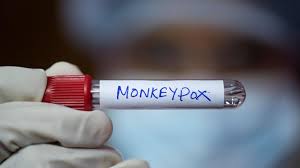
The UK Health Security Agency (UKHSA) has confirmed the detection of a new strain of the mpox virus in England, identified in an individual who recently returned from Asia.
According to Katy Sinka of the UKHSA, the discovery was made through advanced genomic testing.
“Our genomic testing has enabled us to detect this new mpox strain,” she stated. Preliminary analysis shows the virus contains genetic elements from both major mpox subtypes.
The agency explained:
“Genomic sequencing showed that the mpox genome contained elements of clade I and clade IIb mpox.”
Mpox—formerly known as monkeypox—is a viral disease related to smallpox. It typically causes fever, muscle pain, and skin lesions, and spreads through infected animals as well as close physical contact between people.
Sinka noted that viral evolution is expected:
“It’s normal for viruses to evolve, and further analysis will help us understand more about how mpox is changing.”
Experts, however, have raised concerns. Trudie Lang of the University of Oxford described the finding as worrying:
“It is of concern that there is an mpox case in the UK, and of further concern that it is a new recombinant mpox virus.”
She added that the case underscores ongoing global transmission and viral evolution.
Virologist Boghuma Titanji echoed similar concerns:
“The identification of a recombinant mpox strain containing elements of both clade I and clade II is precisely what experts feared would happen.”
Mpox was declared a global public health emergency by the World Health Organization in August 2024 during widespread outbreaks in the Democratic Republic of Congo. The designation was lifted a month later as infections began to decline. In 2025 alone, nearly 48,000 confirmed cases and over 200 deaths have been recorded worldwide across 94 countries.
While the UK continues to report low-level mpox cases, the country maintains a vaccination programme for high-risk groups, including individuals with multiple sexual partners.