
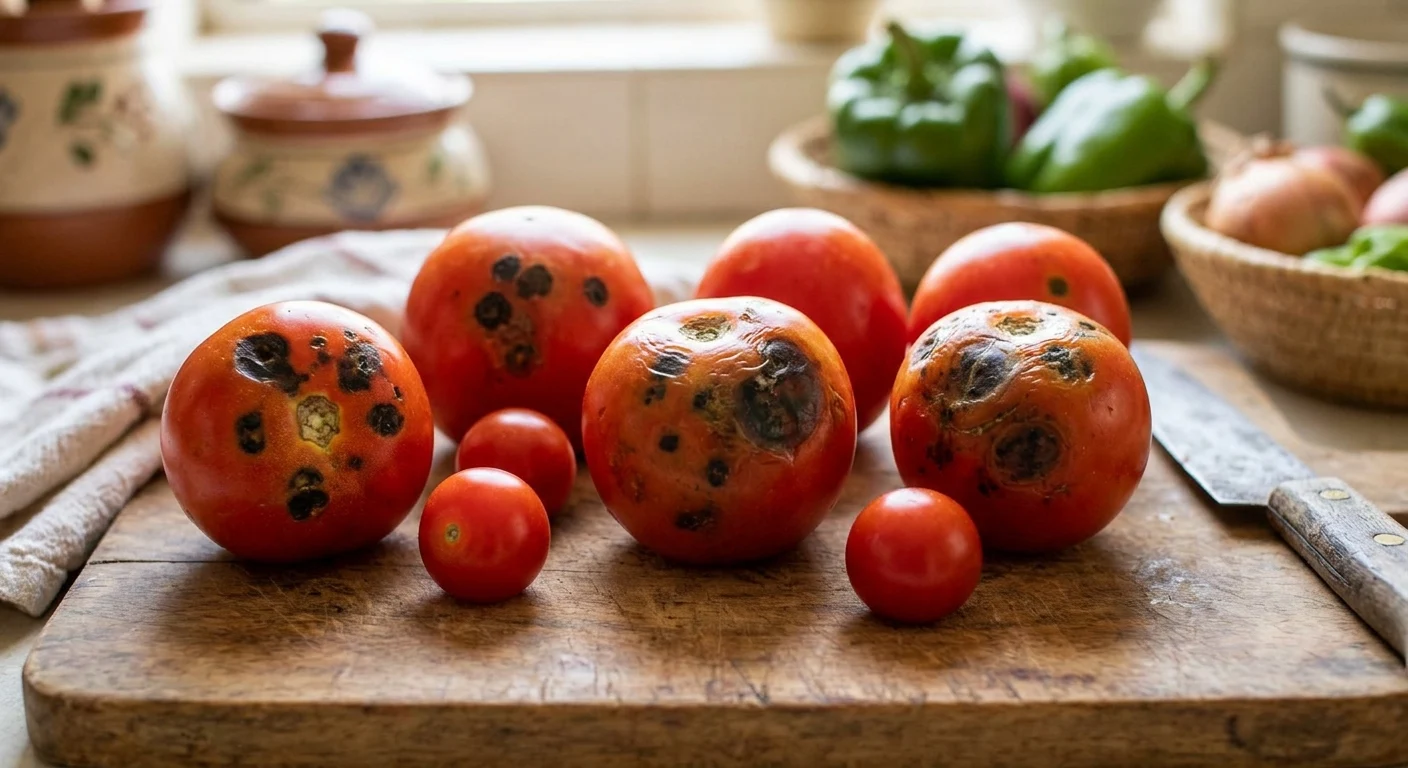
Tomatoes are among the most commonly used ingredients in Nigerian kitchens. From preparing jollof rice and stew to making soup and other everyday meals, tomatoes are almost impossible to avoid in many households.
However, one thing many people overlook when preparing tomatoes is the presence of black spots.
You may have bought fresh tomatoes from the market only to discover dark patches, black spots or unusual marks on some of them. Instead of throwing them away, you might simply cut off the affected portion and use the remaining part for cooking.
While this may appear to be a way of avoiding food waste, it is important to understand that some black spots on tomatoes may indicate fungal infection, decay or other forms of deterioration.
Cooking with spoiled tomatoes without properly identifying the cause of the discoloration could expose you and your family to unnecessary food safety risks.
Here is what you should know.
1. Black Spots May Be a Sign of Fungal Growth
Not every black spot on a tomato means it is contaminated with dangerous microorganisms. Some spots result from bruising, insect damage, sunscald or physiological disorders.
However, black, soft, sunken or spreading spots can sometimes indicate fungal infection or rotting.
Certain fungi can cause visible lesions on tomatoes, particularly when the fruits are exposed to moisture, poor storage conditions or physical damage.
In some cases, mould may not be limited to the portion visible on the surface. This is why it is important not to assume that a tomato is safe simply because the affected area appears small.
2. Some Moulds Can Produce Harmful Substances
One important food safety concern associated with mouldy food is the possibility of mycotoxin production.
Certain species of fungi produce substances known as mycotoxins, which can be harmful when consumed in sufficient quantities.
Although not every mould produces mycotoxins, and not every black spot indicates their presence, the risk is one reason visibly mouldy or rotten tomatoes should not be used for cooking.
Another important point is that cooking does not reliably destroy all mycotoxins. Therefore, boiling, frying or blending a spoiled tomato should not be considered a way of making it safe.
3. Washing or Cutting Off the Black Portion May Not Be Enough
A common practice in many households is to wash a tomato thoroughly or remove the visibly affected portion before using the remaining part.
Unfortunately, this approach is not always safe.
When mould is present, its microscopic structures may extend beyond what is visible on the surface. Cutting away a small black patch does not guarantee that the remaining tomato is free from contamination.
Unlike some firm vegetables, tomatoes have a soft, high-moisture structure. For this reason, food safety guidance generally recommends discarding mouldy soft fruits and vegetables rather than attempting to salvage them.
4. Cooking Does Not Automatically Make Spoiled Tomatoes Safe
One dangerous misconception about food preparation is the belief that heat destroys everything harmful in spoiled food.
Although adequate cooking can kill many disease-causing microorganisms, it does not reverse food spoilage or guarantee the destruction of toxins that may already have formed.
This means that adding visibly mouldy tomatoes to boiling stew or allowing them to cook for a long time does not necessarily make them safe for consumption.
When in doubt, throwing away a spoiled tomato is a safer decision than risking the health of everyone who will eat the meal.
5. Spoiled Tomatoes Can Affect the Quality of Your Food
Apart from potential health risks, deteriorating tomatoes can affect the taste, smell and quality of your meals.
Tomatoes that have started rotting may develop unpleasant odours, unusual textures and undesirable flavours.
Using them can compromise the quality of your stew, sauce or soup, even when other ingredients are fresh.
How to Identify Tomatoes That May Be Unsafe to Eat
Before using tomatoes for cooking, take a few seconds to examine them.
Watch out for these warning signs:
Black or dark patches that are soft, sunken or spreading.
Visible fuzzy mould, which may appear white, green, grey or black.
Unpleasant or rotten smell.
Excessively soft, mushy or leaking portions.
Unusual discoloration accompanied by signs of decay.
Skin that has broken down and become slimy.
Remember that a small, dry surface mark or natural colour variation does not automatically mean a tomato is spoiled. The texture, smell and appearance should all be considered.
What Should You Do If You Find Black Spots on Your Tomatoes?
The safest approach depends on what caused the discoloration.
If the tomato has visible mould, soft rot or signs of spoilage, discard the entire fruit. Do not simply cut away the affected portion and cook with the remainder.
If the mark is a dry, superficial blemish and the tomato remains firm, fresh-smelling and otherwise normal, it may simply be a cosmetic defect rather than spoilage.
When you cannot confidently determine the cause, it is safer to discard it.
Five Ways to Keep Your Tomatoes Fresh for Longer
Proper storage can help reduce spoilage and prevent unnecessary food waste.
Choose carefully: When buying tomatoes, avoid fruits with damaged skin, soft patches or signs of decay.
Separate spoiled tomatoes: One rotten tomato can contaminate other fruits through direct contact and contribute to faster deterioration.
Store appropriately: Keep unripe tomatoes at room temperature until they ripen. Refrigerate ripe tomatoes when you need to slow further ripening.
Avoid unnecessary moisture: Store tomatoes in a clean, dry container and avoid keeping them wet.
Inspect regularly: Check your stored tomatoes and remove any that begin to rot.
Food safety begins in the kitchen, and sometimes the smallest decisions can make a difference.
Although not every black spot on a tomato indicates fungal contamination, visible mould, soft rot and unusual decay should never be ignored.
Remember, cooking is not a guaranteed solution to food spoilage. You cannot always make unsafe food safe simply by adding heat.
Before blending that basket of tomatoes or preparing your next pot of stew, take a moment to inspect what you are using.
Your family’s health is more important than saving a few spoiled tomatoes. When you are unsure whether a tomato has gone bad, do not take the risk. Throw it away.