
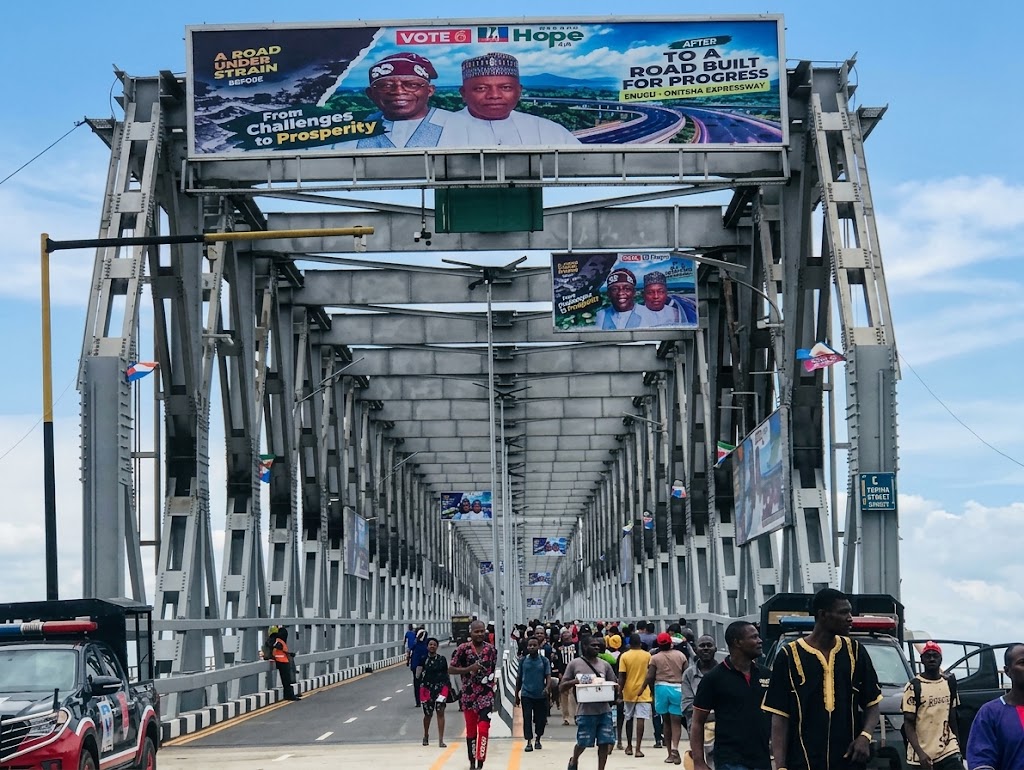
First Niger Bridge Reopens After 38 Days: What You Should Know

The Federal Government has reopened the First Niger Bridge, which connects Onitsha in Anambra State to Asaba in Delta State, following approximately 38 days of closure for emergency rehabilitation works.

The reopening, which took place on Thursday, October 15, 2026, is expected to bring relief to motorists, commuters, traders and transport operators who experienced difficulties travelling between the South-East and South-South regions during the closure.

The bridge was shut on September 7, 2026, after the discovery of damaged and vandalised structural components, including steelwork around its expansion joints. The closure was initially scheduled to end on September 21 but was extended because of persistent rainfall and delays in completing the rehabilitation..,readhttps://juliandailygist.com/2026/09/21/first-niger-bridge-reopening-delayed-as-rain-disrupts-repair-work/

Here is everything you should know about the reopening of the First Niger Bridge and what it means for road users and businesses.

1. The First Niger Bridge Is Officially Open to Traffic

The First Niger Bridge has been reopened to vehicular movement after the completion of major emergency repairs.

The Minister of Works, David Umahi, officially reopened the bridge on October 15, alongside government representatives and traditional rulers from Anambra and Delta states.

The reopening restores direct movement across the River Niger between Onitsha and Asaba, providing relief to thousands of people who depend on the route for their daily activities.

However, the Minister of Works acknowledged that some aspects of the rehabilitation were not completely finished. Motorists should therefore remain cautious and follow traffic instructions while using the bridge.

2. Why Was the First Niger Bridge Closed?

The bridge was closed after an inspection revealed vandalised and damaged structural components, including steelwork around its expansion joints.

These components are important to the bridge’s structural performance and ability to accommodate movement caused by changes in temperature and traffic loads.

The emergency rehabilitation was undertaken to address the identified problems and improve the safety of the bridge for motorists.

Although the closure caused considerable inconvenience, the repairs were necessary to address infrastructure concerns and reduce risks to road users.

3. How Did the Closure Affect Motorists and Businesses?

The closure disrupted transportation between Anambra and Delta states, forcing many motorists to use the Second Niger Bridge and other alternative routes.

For commuters, this meant longer journeys, additional travel time and increased transportation expenses.

Transport operators also faced challenges navigating alternative routes, while traders and businesses experienced disruptions in the movement of goods and services.

Onitsha is an important commercial centre in southeastern Nigeria, and its road connections play a significant role in the distribution of goods to other parts of the country.

The reopening is therefore expected to ease some of the transportation difficulties experienced during the closure.

4. What You Should Know About the New Bridge Demarcations

During the rehabilitation, new demarcations were installed on sections of the bridge, prompting public discussions about their design and safety.

The Federal Ministry of Works subsequently clarified that openings in the demarcations were deliberately created to allow emergency U-turns and provide operational access for agencies such as the Federal Road Safety Corps and the Fire Service.

According to the Federal Controller of Works in Anambra State, Timothy Emenike, the openings were not evidence that the demarcations had been removed or destroyed.

The clarification was intended to address misleading claims circulating on social media about the bridge’s condition.

Motorists should avoid relying on unverified social media reports and should follow official traffic and safety instructions.

5. Will the Reopening Reduce Transportation Costs?

The reopening could help reduce some of the additional transportation expenses associated with the closure.

With the First Niger Bridge available again, motorists travelling between Onitsha and Asaba can resume using this important route instead of relying entirely on alternative crossings.

This could help improve traffic distribution, reduce unnecessary detours and make the movement of goods and passengers more convenient.

However, the extent to which transport fares and logistics costs will decrease depends on several factors, including fuel prices, traffic conditions and transport operators’ operating expenses.

Therefore, while the reopening is a positive development, an immediate reduction in all transportation costs cannot be guaranteed.

6. What Does the Reopening Mean for the Economy?

The First Niger Bridge is more than a transport structure. It is an important connection between two states and supports economic activities across the South-East and South-South regions.

Traders, manufacturers, transport companies and other businesses depend on reliable road connections to move products and reach customers.

When a major transport route is closed, delays can affect supply chains, increase delivery costs and disrupt commercial activities.

Restoring movement across the bridge should help improve connectivity between Anambra and Delta states and support the movement of people and goods.

The development also highlights the importance of maintaining critical national infrastructure before structural problems become more serious.

7. What Should Motorists Do When Using the Bridge?

Although the bridge has reopened, motorists should continue to exercise caution, particularly while any remaining work is being completed.

Road users should observe the following safety measures:

Follow all traffic signs and instructions from traffic officials.

Avoid speeding while crossing the bridge.

Do not make unauthorised U-turns or stop unnecessarily on the bridge.

Avoid tampering with road barriers and other safety installations.

Remain alert to any ongoing maintenance activities.

Report visible hazards or damaged infrastructure to the appropriate authorities.

Motorists should also check for official traffic updates before travelling if they anticipate delays.

The reopening of the First Niger Bridge after approximately 38 days of closure is an important development for motorists, commuters and businesses operating between Anambra and Delta states.

The emergency rehabilitation was undertaken to address structural concerns, while the restoration of traffic movement is expected to ease the pressure placed on alternative routes.

Nevertheless, the reopening should also serve as a reminder that regular inspection, proper maintenance and protection of public infrastructure are essential to ensuring road safety and reliable transportation.

For residents, traders and other road users, the priority now is to make use of the restored route responsibly while remaining attentive to official safety instructions.

Julian Daily Gist Editorial Team

Julian Daily Gist Editorial Team is the team responsible for researching, writing, editing, and publishing news and feature content on Julian Daily Gist. Our coverage includes Nigerian current affairs, lifestyle, entertainment, sports, health, business, and human-interest stories. We aim to provide readers with timely, accurate, and responsibly sourced information. The Julian Daily Gist Editorial Team researches, writes, edits, and publishes news and feature content covering Nigerian current affairs, entertainment, sports, health, business, lifestyle, and human-interest stories. We aim to provide accurate, timely, and responsibly sourced information and update our reports when credible new information becomes available. The Julian Daily Gist Editorial Team is responsible for researching, writing, editing, and publishing content across Julian Daily Gist. Our coverage includes Nigerian current affairs, politics, business, entertainment, sports, health, lifestyle, and human-interest stories. We aim to provide readers with timely, accurate, useful, and responsibly sourced information. Our team makes reasonable efforts to verify important information, identify sources, distinguish allegations from confirmed facts, and update reports when credible new information becomes available. We also believe in transparency and accountability. Readers can contact our editorial team to report factual errors, request corrections, or provide additional information relevant to a published story. Editorial focus: News, current affairs, lifestyle, entertainment, sports, health, business, and human-interest stories. Team BIo: The Julian Daily Gist Editorial Team is responsible for researching, writing, editing, and publishing content across Julian Daily Gist. Our coverage includes Nigerian current affairs, politics, business, entertainment, sports, health, lifestyle, and human-interest stories. We aim to provide readers with timely, accurate, useful, and responsibly sourced information. Our team makes reasonable efforts to verify important information, identify sources, distinguish allegations from confirmed facts, and update reports when credible new information becomes available. We also believe in transparency and accountability. Readers can contact our editorial team to report factual errors, request corrections, or provide additional information relevant to a published story. Editorial focus: News, current affairs, lifestyle, entertainment, sports, health, business, and human-interest stories. Editorial Policy: At Julian Daily Gist, our goal is to provide readers with timely, useful, accurate, and responsibly presented news and information. We cover Nigerian current affairs, politics, business, entertainment, sports, health, lifestyle, human-interest stories, and other topics of interest to our readers. 1. Accuracy and Verification We make reasonable efforts to ensure that information published on Julian Daily Gist is accurate and presented in its proper context. Before publishing a report, our editorial team makes reasonable efforts to: - Check information against credible sources. - Verify names, dates, locations, figures, and other important details. - Attribute information to the appropriate source. - Distinguish confirmed facts from allegations, claims, opinions, and speculation. - Update stories when credible new information becomes available. When information cannot be independently verified, we make this clear to readers rather than presenting it as established fact. 2. Sources We use a range of sources, including: - Official government statements. - Police and security agencies. - Courts and legal documents. - Government agencies. - Direct interviews and statements. - Reputable news organizations. - Publicly available records. - Verified social media accounts and statements. When an article relies substantially on information reported by another publication, we aim to clearly attribute the information to that source. We do not intentionally present another publication's reporting as our own. 3. Originality Julian Daily Gist aims to provide original editorial value. When we report information that has already been published elsewhere, we seek to add value through original writing, context, verification, analysis, additional information, or other useful material. We do not intentionally copy and republish articles from other websites without appropriate attribution and meaningful editorial contribution. 4. Allegations and Sensitive Claims When reporting allegations involving individuals or organizations, we make reasonable efforts to clearly identify allegations as allegations. We avoid presenting unproven accusations as established facts. Where relevant, we seek or include responses from the person, organization, or representative concerned. For criminal matters, we recognize that an allegation, arrest, charge, or accusation does not by itself establish guilt. 5. Headlines Our headlines are intended to accurately reflect the content of our articles. We aim to avoid deliberately misleading headlines, fabricated claims, or headlines that exaggerate facts simply to generate clicks. 6. Corrections and Updates We take corrections seriously. If we discover that an article contains a significant factual error, we may correct or update the article as appropriate. Readers who identify an error are encouraged to contact us with specific information supporting the correction. Where appropriate, significant corrections or updates may be noted within the article. 7. Editorial Independence Editorial decisions are made independently of advertisers, sponsors, commercial partners, and other external interests. Advertising or sponsorship does not automatically influence our editorial decisions or the opinions expressed by our writers. 8. Sponsored and Promotional Content Where Julian Daily Gist publishes sponsored, paid, or promotional content, we aim to clearly identify it as such. Sponsored content does not necessarily represent the independent editorial views of Julian Daily Gist. 9. Conflicts of Interest Our editorial team should avoid situations where personal, financial, or other interests could improperly influence reporting. Where a relevant conflict of interest exists, we aim to disclose it when appropriate. 10. Use of Images and Other Media We aim to use images, videos, graphics, and other media responsibly and with appropriate permission, licensing, attribution, or other lawful basis where required. We do not knowingly use copyrighted material in a manner that infringes the rights of its owner. If you believe that material published on Julian Daily Gist infringes your copyright, please contact us so that we can review the matter. 11. Artificial Intelligence We may use technology and artificial intelligence tools to assist with certain editorial tasks, such as research support, proofreading, formatting, transcription, or drafting assistance. However, AI-generated information is not treated as automatically accurate. Content remains subject to human review, editing, fact-checking, and editorial judgment before publication where appropriate. We do not intentionally publish fabricated information generated by AI. 12. Privacy and Personal Information We take reasonable care when handling personal information and avoid publishing unnecessary private information about individuals. Sensitive personal information is published only when there is a legitimate public-interest reason and where appropriate. Our handling of visitor information is explained in our Privacy Policy. 13. Opinion and Commentary Opinion articles and commentary represent the views expressed by the respective writer or contributor. Where appropriate, opinion content will be identified as commentary, analysis, or opinion so that readers can distinguish it from straightforward news reporting. 14. User-Generated Content Comments and other material submitted by readers may be moderated. We reserve the right to remove content that is unlawful, defamatory, abusive, discriminatory, misleading, threatening, spam-related, or otherwise inappropriate. User comments do not necessarily represent the views of Julian Daily Gist. 15. Our Commitment We are committed to improving the quality, accuracy, transparency, and usefulness of Julian Daily Gist. As our publication grows, we will continue reviewing our editorial practices and updating this policy when necessary. 16. Contact and Corrections If you have a correction, clarification, complaint, copyright concern, or question about our editorial practices, please contact us through our Contact Us page.

You May Also Like

Leave a Reply

Your email address will not be published. Required fields are marked *