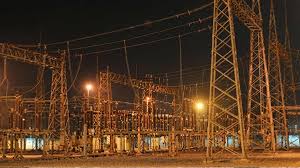
Nigerian electricity workers have raised alarm over worsening insecurity, deepening poverty, and what they describe as a collapsing power sector pushing them to the brink.
As the nation marks Workers’ Day 2026, the National Union of Electricity Employees (NUEE) says its members are increasingly exposed to violence, unsafe working conditions, and economic hardship while striving to keep the country powered.
In a statement by its Acting General Secretary, Dominic Igwebike, the union lamented that challenges in the sector—from overstretched infrastructure to erratic electricity supply—are rapidly mounting.
According to NUEE, workers are being forced to operate under extreme pressure, even as inflation surges, wages stagnate, and the cost of living continues to spiral.
The union warned that without urgent reforms, both the workforce and the nation’s fragile power system could face further decline.
It said: “We work under very unsafe environments and conditions. Our linemen and technicians in the transmission sector are threatened daily by kidnappers and bandits, while distribution engineers and technicians are often attacked by hoodlums and community youths. Our sales and marketing teams also face severe harassment, intimidation, and abuse while rendering services to the public.”
The union described a grim reality in which workers risk their lives simply to perform their duties. Across the country, electricity infrastructure has become a target for vandalism and attacks, leaving technical staff vulnerable. Substations are damaged, transmission lines sabotaged, and entire communities plunged into darkness, compounding the already dire state of power supply.
Economic hardship is further worsening the crisis. NUEE noted that many workers are grappling with stagnant salaries, casualisation of labour, and poor remuneration amid a weakening currency and rising inflation.
“For many, the promise of decent work—defined by fair pay and safe conditions—has become increasingly unattainable,” the union said, adding: “Insecurity continues to cast a long shadow over our workplaces and communities. No worker should have to choose between earning a living and staying alive.”
The union also criticised the state of Nigeria’s power sector reforms, arguing that privatisation has failed to deliver meaningful improvements. Instead, it said, the system has produced “public disaster and private gains,” with Nigerians still grappling with unreliable electricity supply.
Despite Nigeria’s population of over 220 million, power generation remains below 5,000 megawatts—far below global benchmarks—placing significant strain on the system and the workers who maintain it.
Yet, amid the crisis, electricity workers have remained resilient. NUEE praised its members for their dedication, noting that they continue to serve in both urban and remote areas under hazardous conditions. However, the union stressed that resilience should not be mistaken for acceptance.
It called for urgent action to address insecurity, improve working conditions, ensure fair wages, and overhaul the struggling power sector.
As Workers’ Day is commemorated, electricity workers say the message is clear: without safety, dignity, and meaningful reform, the backbone of Nigeria’s power supply will continue to weaken—plunging the nation deeper into darkness.
Julian Daily Gist Editorial Team
Julian Daily Gist Editorial Team is the team responsible for researching, writing, editing, and publishing news and feature content on Julian Daily Gist. Our coverage includes Nigerian current affairs, lifestyle, entertainment, sports, health, business, and human-interest stories. We aim to provide readers with timely, accurate, and responsibly sourced information.
The Julian Daily Gist Editorial Team researches, writes, edits, and publishes news and feature content covering Nigerian current affairs, entertainment, sports, health, business, lifestyle, and human-interest stories.
We aim to provide accurate, timely, and responsibly sourced information and update our reports when credible new information becomes available.
The Julian Daily Gist Editorial Team is responsible for researching, writing, editing, and publishing content across Julian Daily Gist.
Our coverage includes Nigerian current affairs, politics, business, entertainment, sports, health, lifestyle, and human-interest stories.
We aim to provide readers with timely, accurate, useful, and responsibly sourced information. Our team makes reasonable efforts to verify important information, identify sources, distinguish allegations from confirmed facts, and update reports when credible new information becomes available.
We also believe in transparency and accountability. Readers can contact our editorial team to report factual errors, request corrections, or provide additional information relevant to a published story.
Editorial focus: News, current affairs, lifestyle, entertainment, sports, health, business, and human-interest stories.
Team BIo:
The Julian Daily Gist Editorial Team is responsible for researching, writing, editing, and publishing content across Julian Daily Gist.
Our coverage includes Nigerian current affairs, politics, business, entertainment, sports, health, lifestyle, and human-interest stories.
We aim to provide readers with timely, accurate, useful, and responsibly sourced information. Our team makes reasonable efforts to verify important information, identify sources, distinguish allegations from confirmed facts, and update reports when credible new information becomes available.
We also believe in transparency and accountability. Readers can contact our editorial team to report factual errors, request corrections, or provide additional information relevant to a published story.
Editorial focus: News, current affairs, lifestyle, entertainment, sports, health, business, and human-interest stories.
Editorial Policy:
At Julian Daily Gist, our goal is to provide readers with timely, useful, accurate, and responsibly presented news and information.
We cover Nigerian current affairs, politics, business, entertainment, sports, health, lifestyle, human-interest stories, and other topics of interest to our readers.
1. Accuracy and Verification
We make reasonable efforts to ensure that information published on Julian Daily Gist is accurate and presented in its proper context.
Before publishing a report, our editorial team makes reasonable efforts to:
- Check information against credible sources.
- Verify names, dates, locations, figures, and other important details.
- Attribute information to the appropriate source.
- Distinguish confirmed facts from allegations, claims, opinions, and speculation.
- Update stories when credible new information becomes available.
When information cannot be independently verified, we make this clear to readers rather than presenting it as established fact.
2. Sources
We use a range of sources, including:
- Official government statements.
- Police and security agencies.
- Courts and legal documents.
- Government agencies.
- Direct interviews and statements.
- Reputable news organizations.
- Publicly available records.
- Verified social media accounts and statements.
When an article relies substantially on information reported by another publication, we aim to clearly attribute the information to that source.
We do not intentionally present another publication's reporting as our own.
3. Originality
Julian Daily Gist aims to provide original editorial value.
When we report information that has already been published elsewhere, we seek to add value through original writing, context, verification, analysis, additional information, or other useful material.
We do not intentionally copy and republish articles from other websites without appropriate attribution and meaningful editorial contribution.
4. Allegations and Sensitive Claims
When reporting allegations involving individuals or organizations, we make reasonable efforts to clearly identify allegations as allegations.
We avoid presenting unproven accusations as established facts.
Where relevant, we seek or include responses from the person, organization, or representative concerned.
For criminal matters, we recognize that an allegation, arrest, charge, or accusation does not by itself establish guilt.
5. Headlines
Our headlines are intended to accurately reflect the content of our articles.
We aim to avoid deliberately misleading headlines, fabricated claims, or headlines that exaggerate facts simply to generate clicks.
6. Corrections and Updates
We take corrections seriously.
If we discover that an article contains a significant factual error, we may correct or update the article as appropriate.
Readers who identify an error are encouraged to contact us with specific information supporting the correction.
Where appropriate, significant corrections or updates may be noted within the article.
7. Editorial Independence
Editorial decisions are made independently of advertisers, sponsors, commercial partners, and other external interests.
Advertising or sponsorship does not automatically influence our editorial decisions or the opinions expressed by our writers.
8. Sponsored and Promotional Content
Where Julian Daily Gist publishes sponsored, paid, or promotional content, we aim to clearly identify it as such.
Sponsored content does not necessarily represent the independent editorial views of Julian Daily Gist.
9. Conflicts of Interest
Our editorial team should avoid situations where personal, financial, or other interests could improperly influence reporting.
Where a relevant conflict of interest exists, we aim to disclose it when appropriate.
10. Use of Images and Other Media
We aim to use images, videos, graphics, and other media responsibly and with appropriate permission, licensing, attribution, or other lawful basis where required.
We do not knowingly use copyrighted material in a manner that infringes the rights of its owner.
If you believe that material published on Julian Daily Gist infringes your copyright, please contact us so that we can review the matter.
11. Artificial Intelligence
We may use technology and artificial intelligence tools to assist with certain editorial tasks, such as research support, proofreading, formatting, transcription, or drafting assistance.
However, AI-generated information is not treated as automatically accurate. Content remains subject to human review, editing, fact-checking, and editorial judgment before publication where appropriate.
We do not intentionally publish fabricated information generated by AI.
12. Privacy and Personal Information
We take reasonable care when handling personal information and avoid publishing unnecessary private information about individuals.
Sensitive personal information is published only when there is a legitimate public-interest reason and where appropriate.
Our handling of visitor information is explained in our Privacy Policy.
13. Opinion and Commentary
Opinion articles and commentary represent the views expressed by the respective writer or contributor.
Where appropriate, opinion content will be identified as commentary, analysis, or opinion so that readers can distinguish it from straightforward news reporting.
14. User-Generated Content
Comments and other material submitted by readers may be moderated.
We reserve the right to remove content that is unlawful, defamatory, abusive, discriminatory, misleading, threatening, spam-related, or otherwise inappropriate.
User comments do not necessarily represent the views of Julian Daily Gist.
15. Our Commitment
We are committed to improving the quality, accuracy, transparency, and usefulness of Julian Daily Gist.
As our publication grows, we will continue reviewing our editorial practices and updating this policy when necessary.
16. Contact and Corrections
If you have a correction, clarification, complaint, copyright concern, or question about our editorial practices, please contact us through our Contact Us page.