On Sunday night, December 4, Denmark and Greenland called on U.S. President Donald Trump to stop making threats about taking over Greenland, after he reiterated his interest in acquiring the territory in an interview with The Atlantic.
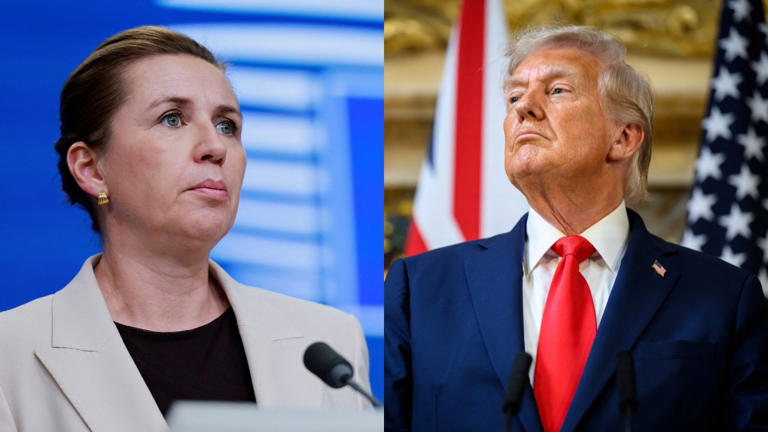
Danish Prime Minister Mette Frederiksen dismissed Trump’s comments as “absolutely nonsensical,” stating that the United States has “no right to annex any of the three countries in the Danish Kingdom.” She urged Washington to respect Greenland’s sovereignty, saying, “I would therefore strongly urge the U.S. to stop the threats against a historically close ally and against another country and another people, who have very clearly said that they are not for sale.”
Trump told the magazine, “We do need Greenland, absolutely. We need it for defense.” His remarks came a day after the U.S. captured Venezuelan President Nicolás Maduro, raising concerns in Denmark that similar pressure could be applied to Greenland, a self-governing Danish territory.
Greenland’s Prime Minister Jens-Frederik Nielsen also criticised Trump’s statements, calling them inaccurate and disrespectful. “When the President of the United States says that ‘we need Greenland’ and links us to Venezuela and military intervention, it’s not just wrong. It’s disrespectful,” Nielsen said.
Trump has previously advocated for Greenland to become part of the United States, a plan supported by Louisiana Governor Jeff Landry, whom Trump appointed on December 21 as a special envoy to Greenland. The move drew criticism from both Copenhagen and Nuuk.
Greenland’s strategic location between Europe and North America makes it important for the U.S. ballistic missile defence system, while its mineral wealth has attracted attention as Washington seeks to reduce dependence on Chinese imports.
Greenland, a former Danish colony, gained the right to declare independence under a 2009 agreement but remains financially dependent on Denmark. Over the past year, Copenhagen has worked to repair relations with Greenland while also easing tensions with the Trump administration through increased investment in Arctic defence.