 0
0
 0
0
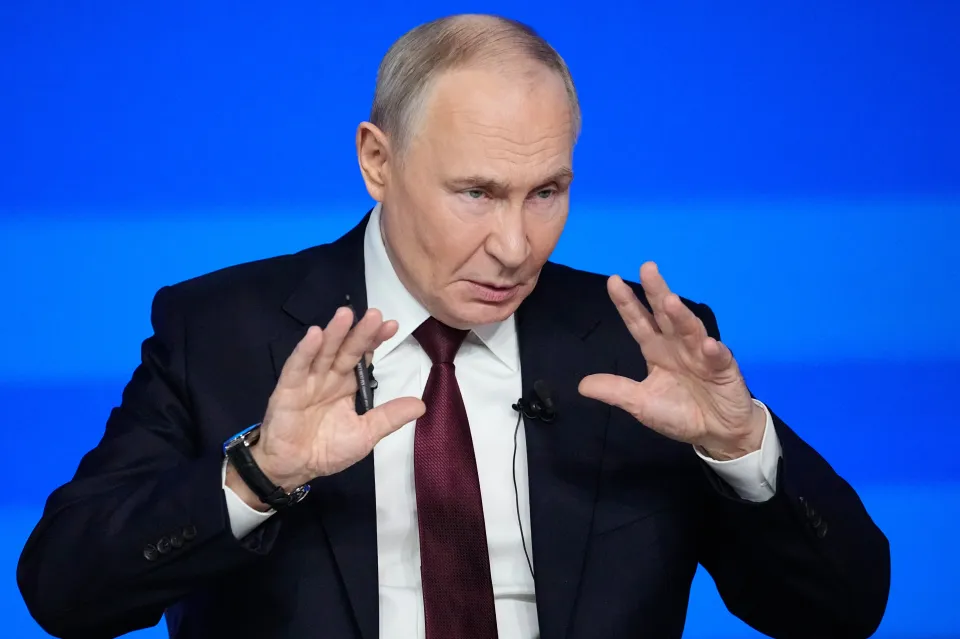
Russian President Vladimir Putin is reportedly preparing for a pivotal phase in the war, with Western analysts warning that his ambitions may extend beyond Ukraine as shifting diplomatic and military dynamics reshape the global landscape. Experts fear the Kremlin believes conditions are falling into place for a calculated escalation that could test NATO’s resolve, strain European unity, and cement Putin’s legacy through a decisive geopolitical victory.
Former diplomat and King’s College London fellow Tim Wilsey said Moscow appears to be entering a rare moment of advantage. With Ukraine under intense pressure and European nations grappling with funding shortfalls, manpower challenges, and wavering political will, Wilsey believes Putin sees 2026 as an opportunity to regain momentum. Speaking to The Sun, he said the Russian leader understands how to turn battlefield perceptions into strategic leverage and has not enjoyed such favourable conditions in years.
Wilsey argued that the current trajectory could enable Putin to force a peace settlement largely on Moscow’s terms. Such an outcome, he warned, would likely be sold domestically as a major victory, even as the Russian public remains aware of the heavy human cost. Analysts caution that any agreement reached under these circumstances could merely freeze the conflict rather than resolve it, allowing Russia time to regroup, rearm, and resume hostilities at a later stage.
According to Wilsey, Russia’s military has suffered deep structural damage and would need several years to recover. He estimated a three-year rebuilding period but stressed that Putin’s broader project would be far from over. Instead of open warfare, he predicted a shift toward a shadow phase of conflict marked by cyberattacks, political interference, sabotage operations, and targeted assassinations.
Wilsey also pointed to growing Russian influence across parts of the former Soviet space, describing Moldova as particularly vulnerable. Ukraine, he added, could still face incremental pressure, with Russia potentially testing Western security guarantees by pushing gradually at the country’s borders to gauge how firm those assurances truly are.
One area raising alarm among security analysts is Narva, an Estonian border city with a predominantly Russian-speaking population. Wilsey described the city as a dangerous flashpoint, questioning whether NATO, particularly the United States, would be willing to go to war over a single town. He noted that Putin has repeatedly cast doubt on Narva’s status, suggesting it is historically Russian territory, a narrative that has unsettled NATO officials.
Foreign policy analyst Alan Mendoza of the Henry Jackson Society said developments in 2026 may depend heavily on decisions made in Washington. He argued that former U.S. President Donald Trump’s approach could prove decisive, either by strengthening Ukraine through robust support or by disengaging, effectively giving Putin room to expand his ambitions. Mendoza warned that the most dangerous outcome would be a withdrawal of U.S. interest, allowing Moscow to operate with minimal restraint.
Meanwhile, the Kremlin has adopted a confident tone, with Putin declaring that Russian forces now hold the “strategic initiative.” He has portrayed Ukraine as the primary obstacle to peace while claiming Russia is prepared to end the war under conditions it previously set. Analysts believe this messaging is aimed at reframing coercion as diplomacy and steering negotiations toward a settlement that locks in Russian gains.
Diplomatic efforts have reportedly intensified, with talks in Berlin said to be addressing key elements of a potential agreement, including the deployment of a European-led peacekeeping force. Ukrainian President Volodymyr Zelensky has acknowledged that territorial concessions remain the most difficult issue and has indicated Kyiv may drop its NATO membership ambitions in exchange for strong security guarantees. However, critics warn that such a deal could grant Russia many of its objectives while offering only the appearance of stability.
Wilsey cautioned that Europe’s slow response at this critical juncture could allow Putin to emerge stronger, with altered borders and a divided Western alliance. Ultimately, he argued, the defining factor of 2026 may not be Putin’s actions alone, but how decisively the West chooses to respond.